


For anyone entering the biomass energy business, two questions dominate the early research phase: what does a wood pellet mill price look like, and where can you find a reliable wood pellet plant for sale? This guide provides a comprehensive answer to both, along with practical advice for evaluating suppliers, comparing configurations, and making a sound capital investment.
What Determines Wood Pellet Mill Price?
The wood pellet mill price varies considerably based on several technical and commercial factors. Understanding these variables helps buyers avoid overpaying for features they don’t need—or underpaying for machines that fail to deliver.
1. Production Capacity The single biggest determinant of price is output capacity. Entry-level flat-die mills designed for small farms or testing purposes may cost as little as $3,000–$10,000. Mid-range ring-die mills with capacities of 1–3 tons per hour typically range from $20,000–$80,000. High-capacity industrial pellet mills capable of 5–15+ tons per hour can cost $100,000–$300,000 or more.
2. Die and Roller Material Quality Wear components like dies and rollers are made from various alloy grades. Higher chromium and nickel content alloys last significantly longer but add to upfront cost. Machines with premium wear parts offer better long-term value despite higher initial price.
3. Drive System and Motor Specifications The transmission system—whether belt-driven, gearbox-driven, or direct-coupled—affects both efficiency and maintenance requirements. Premium drive systems reduce energy consumption and lower long-term operating costs.
4. Automation and Control Systems Basic machines require manual parameter adjustment, while advanced models feature PLC control panels, automated lubrication, and remote monitoring capability. These features add to wood pellet mill price but improve operational reliability.
How to Evaluate a Wood Pellet Plant for Sale
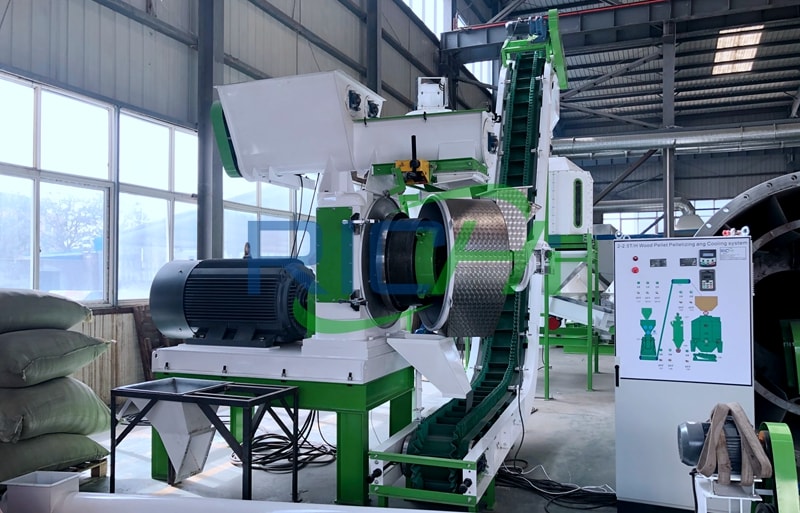
When searching for a wood pellet plant for sale, buyers should evaluate the offering as a complete system rather than individual machines. A full production line includes pre-processing, drying, pelletizing, cooling, screening, and packaging stages—each must be assessed for capacity, condition, and compatibility.
Key questions to ask when reviewing a wood pellet plant for sale:
- What is the verified production capacity under real operating conditions?
- What is the age and maintenance history of key components?
- Is the plant certified to relevant standards (ENplus, ISO, etc.)?
- What is included in the sale—civil infrastructure, utilities connections, inventory?
- Is technical support available post-purchase?
For expanded guidance and real transaction examples, see post materials from industry experts who have documented plant acquisition case studies in detail.
New vs. Used Plant Investment Considerations
Buyers can choose between new custom-built plants and used wood pellet plant for sale options. Each has distinct advantages:
New Plants: Custom-designed to your specifications, come with full warranties, and incorporate the latest technology. Higher upfront cost but lower risk and better long-term performance.
Used Plants: Lower initial investment and faster deployment if infrastructure is already in place. Require thorough technical inspection to identify hidden maintenance issues or capacity limitations.
For new plant investments, partnering with Richi manufacture ensures you receive a complete, warranty-backed system engineered to your exact production requirements.
Why Richi Manufacture Stands Out on Price and Quality
In a market crowded with low-cost suppliers, Richi manufacture occupies a distinct position: delivering industrial-grade performance at competitive pricing. Their transparent quotation process clearly itemizes each component cost, making it easy for buyers to understand exactly what they are paying for.
Richi manufacture serves clients across six continents and has engineered plants for feedstocks ranging from pine sawdust to eucalyptus chips to agricultural straw. This breadth of experience translates into practical engineering knowledge that keeps your wood pellet mill price optimized without compromising output quality.
Total Cost of Ownership Beyond the Purchase Price
Smart buyers look beyond the initial wood pellet mill price and calculate total cost of ownership (TCO) over a 5–10 year production horizon. TCO includes:
- Energy consumption per ton of pellets produced
- Die and roller replacement frequency and cost
- Labor requirements and automation savings
- Downtime frequency and maintenance cost
- Resale or salvage value at end of operational life
Machines with a higher purchase price but superior energy efficiency and durability often deliver significantly lower TCO than cheaper alternatives.
Conclusion
Understanding wood pellet mill price in full context—including capacity, material quality, and total operating costs—is essential to making a wise investment. When evaluating a wood pellet plant for sale, conduct thorough due diligence and partner with proven suppliers like Richi manufacture. Use available research resources, including platforms where you can see post for industry benchmarks, to ensure your investment delivers the returns your business plan demands.


