


Argentina is one of the world’s leading beef producers and exporters, supported by vast grasslands, a strong livestock tradition, and abundant agricultural resources. As cattle farming continues to modernize, the demand for efficient and stable feed processing systems is steadily increasing. Under this trend, the cattle feed production line in Argentina has become a critical investment for ranchers, feed manufacturers, and agribusiness companies seeking higher productivity and consistent feed quality.
Argentina’s Cattle Industry and Feed Market Overview
Cattle farming plays a central role in Argentina’s agricultural economy. Beef cattle and dairy cattle operations rely on a combination of natural pasture and formulated feed to ensure optimal growth and health. Common feed raw materials include corn, wheat, soybean meal, alfalfa, sunflower meal, and various crop by-products.
Thanks to this rich raw material base, a cattle feed manufacturing line in Argentina can be designed to process both concentrate feed and roughage feed. This flexibility allows producers to formulate customized diets for calves, growing cattle, and finishing cattle, while maximizing the utilization of locally available resources.
Standard Process Flow of a Cattle Feed Production Line
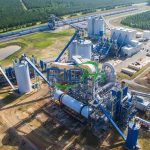
A modern cattle feed production line in Argentina typically consists of several well-integrated processing sections that ensure stable output and uniform feed quality.
The process begins with raw material cleaning and pre-treatment, where impurities such as stones and metal are removed to protect downstream equipment. Next, the grinding system reduces grains and fibrous materials to an appropriate particle size, improving digestibility and mixing efficiency.
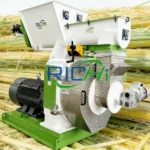
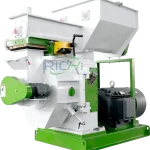
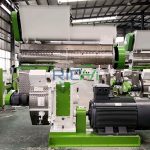
The batching and mixing system plays a vital role in ensuring accurate formulation. Multiple ingredients and additives are precisely weighed and uniformly blended. After mixing, the material enters the pelleting section, where a high-performance cattle feed pellet machine compresses the feed into dense, durable pellets.
Finally, the pellets pass through cooling, screening, and packing systems. Proper cooling enhances pellet hardness and shelf life, making the finished feed suitable for storage, transportation, and large-scale distribution.
(Useful link: https://pelletisingmachine.com/animal-feed-production-line/)
Key Advantages for Cattle Feed Production in Argentina
When designed specifically for local conditions, an automatic cattle feed production line in Argentina offers several technical and economic advantages.
First, high automation levels significantly reduce labor requirements while improving production consistency. Centralized control systems allow operators to monitor output, energy consumption, and formulation accuracy in real time.
Second, robust machine components such as wear-resistant ring dies and rollers are well suited for processing high-fiber materials like alfalfa and grass meal. This ensures long service life and stable performance even under continuous operation.
Additionally, modular system design allows producers to expand capacity or upgrade equipment as market demand grows, making the investment more future-proof.
Wide Application Across Different Cattle Feeding Systems
A professionally engineered cattle feed processing line in Argentina can support various feeding strategies. For beef cattle, it can produce high-energy feed pellets that promote faster weight gain and improved feed conversion rates. For dairy cattle, the line can manufacture nutritionally balanced pellets that support milk yield and animal health.
By adjusting formulations and pelleting parameters, the same production line can also process calf starter feed, grower feed, and finishing feed. This versatility makes the system ideal for integrated ranch operations as well as commercial feed mills.
Economic and Long-Term Investment Value
Investing in a cattle feed production line in Argentina delivers long-term economic benefits. On-site feed production reduces dependence on external suppliers, lowers transportation costs, and improves feed freshness and quality control.
Moreover, stable pellet quality enhances feeding efficiency and reduces waste, directly contributing to lower production costs per kilogram of beef or milk. For feed manufacturers, modern cattle feed production equipment in Argentina also strengthens competitiveness in both domestic and export markets.
Conclusion
With abundant raw materials and a strong cattle industry foundation, Argentina offers ideal conditions for modern feed processing. A well-designed cattle feed production line in Argentina enables producers to fully utilize local resources, improve feed quality, and achieve efficient, scalable production. As cattle farming continues to evolve, investing in advanced feed production technology will remain a key driver of sustainable growth and profitability.


