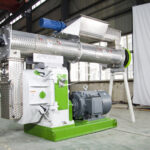
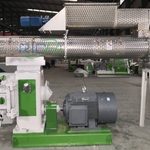



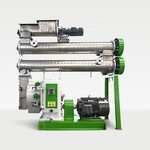



A rice husk powder making machine is an industrial hammer mill used to reduce rice husks into a controlled particle size for biomass pellet production, powder sales and other downstream applications. RICHI’s published SFSP crushing machine range covers approximately 0.5–8 t/h, with screen sizes customizable for outputs from roughly 0.5–20 mm. The listed single-machine ex-factory price range is USD 3,000–35,000. The right model depends on target fineness, incoming husk condition, accepted output, dust collection and whether the customer needs only a crusher or a complete powder preparation section.
1. Rice Husk Powder Machine Models, Capacity and Price
Our SFSP hammer mill range includes the following model configurations. Prices are ex-factory references for the individual crusher and do not automatically include dust collection, conveying, installation or other project costs.
| Model | Rotor Diameter | Rated Power | Capacity | Reference Price |
|---|---|---|---|---|
| SFSP56×40 | 560 mm | 37 kW | 0.5–0.6 t/h | $3,000–5,000 |
| SFSP66×60 | 660 mm | 55 kW | 1.0–1.2 t/h | $4,500–7,000 |
| SFSP66×80 | 660 mm | 90 kW | 2.0–2.5 t/h | $6,000–9,000 |
| SFSP66×100 | 660 mm | 132 kW | 3.0–4.0 t/h | $8,000–13,000 |
| SFSP66×120 | 660 mm | 185 kW | 4.0–5.0 t/h | $11,000–17,000 |
| SFSP66×120 | 660 mm | 220 kW | 5.0–6.0 t/h | $14,000–22,000 |
| SFSP66×150 | 660 mm | 220 kW | 7.0–8.0 t/h | $20,000–35,000 |
Our current model table contains two SFSP66×120 entries with different power and capacity figures. We will confirm the exact designation and configuration in the quotation rather than treating the two entries as interchangeable. Confirm the exact model designation and configuration in the quotation rather than assuming the two rows are interchangeable. Our SFSP range covers approximately 0.5–8 t/h and 0.5–20 mm as the possible powder size, depending on screen configuration.
2. What Determines the Required Rice Husk Powder Fineness?
Rice husk powder is not one standardized product. A rice mill selling powder as a raw material may need a different particle size from a biomass plant feeding a pellet mill. For common powder applications, we work with 1–3 mm as a reference range; for some pelletizing processes, 3–5 mm may be suitable. The actual screen should be selected according to the downstream process and the customer’s product specification.
Finer grinding generally increases energy demand and may reduce throughput. If oversize particles are screened out and returned for another pass, the grinder handles a circulating load greater than the net saleable powder output. A supplier’s capacity figure should therefore be tied to the actual screen mesh and accepted particle-size distribution, not simply the incoming feed rate.
3. Rice Husk Characteristics, Impurities and Wear
Rice husks from different mills can vary in moisture, particle size, bulk density and contamination. Some batches contain fine soil or foreign material, while others arrive with more consistent husk size. These differences affect feeding, grinding load, screen life and powder quality. In our Vietnam project, the incoming husks contained husks mixed with impurities and therefore included a cleaning screen and pulse dust collector in the crushing arrangement.
Before selecting the crusher, check the raw material for stones, metal and excessive foreign matter. Hard contaminants can damage hammers and screens. Rice husk also contains silica-rich outer material, so wear-part inspection and replacement planning matter when the machine operates for long shifts. A lower purchase price is not necessarily economical if the selected hammer and screen arrangement cannot withstand the actual feedstock.
4. How the Hammer Mill Produces Controlled Powder
The SFSP hammer mill uses a high-speed rotor carrying hammers that impact the incoming husks. Across the SFSP models, rotor speed is approximately 2,980 rpm and hammer linear speed ranges from 88 to 103 m/s. Material remains in the grinding chamber until it can pass through the selected screen openings. Screen mesh therefore has a direct influence on the final particle size and practical output.
Changing to a smaller screen does not simply make the same machine produce finer powder at the same rate. Smaller openings increase resistance and may reduce throughput, particularly when material moisture is high or feeding is uneven. The correct setup is established by testing the customer’s rice husk with the target screen, then measuring accepted output and power consumption.
5. Standalone Crusher or Complete Rice Husk Powder System?
| Equipment | Function | When It Is Needed |
|---|---|---|
| Receiving hopper and feeder | Provides steady feed to the grinder | When manual feeding is inconsistent |
| Cleaning screen | Removes stones and foreign material | When husk supply contains impurities |
| Hammer mill | Reduces husk particle size | Main powder-making stage |
| Cyclone separator | Separates powder from process air | For powder recovery and conveying |
| Pulse dust collector | Captures airborne dust | For dust control and cleaner operation |
| Conveyors and storage | Transfers and buffers powder | When integrated with downstream production |
| Pellet mill and cooler | Converts prepared powder into biomass pellets | When the final product is pellets rather than loose powder |
A rice mill that already has suitable conveying and dust collection may only need a crusher. A biomass pellet plant may require a complete route from husk receiving and cleaning through grinding, conveying, pelletizing and cooling. In our Philippines project, the system processes wood chips and rice husks with a 3–5 mm screen before feeding a pellet mill that produces 4–6 mm pellets. In our India project, we supplied a crusher with a pulse dust collector, cyclone and blower to produce 1–3 mm powder for sale.
6. Dust Collection Is a Production Requirement, Not Decoration
Fine rice husk powder becomes airborne during grinding, screening and transfer. A cyclone and pulse dust collector help recover powder and reduce dust escaping into the workshop. Dust collection must be sized for the airflow and pressure losses of the complete system; a small collector attached to a high-capacity hammer mill may not capture dust effectively at every transfer point. The site should also assess housekeeping, grounding and applicable combustible-dust safety requirements.
7. Capacity Matching: Avoid a Crusher That Becomes the Pellet Plant Bottleneck
If a downstream pellet mill requires 3 t/h of prepared rice husk powder but the crusher produces only 2–2.5 t/h at the selected screen size, the pellet mill will not reach its target output. Conversely, selecting an 8 t/h crusher for a 2 t/h pellet line may create unnecessary capital cost unless the plant plans to sell surplus powder or expand later. Match the crusher to accepted powder output, screen mesh, operating hours and the actual pellet mill consumption.
For example, if a crusher is rated at 3–4 t/h on a coarser screen but produces only 2.5 t/h at the finer screen required by the customer, the plant should be designed around the tested 2.5 t/h result. Capacity should never be copied from a brochure without the screen and material conditions attached.
8. Project References: Different Applications, Different Configurations
RICHI’s published projects illustrate the range of applications. In Thailand, a 1–2 t/h biomass project uses sawdust and rice husks for fuel pellet production, with a reported crusher price of USD 4,500. In Bangladesh, a 2 t/h project supplies powder for a rice husk pellet line, with a reported crusher price of USD 6,000. In Vietnam, a 0.5–0.6 t/h crushing system includes a cleaning screen and pulse dust collector because the raw husk contains impurities.
For larger operations, the Indonesia project processes 3–4 t/h of rice husk powder using customized screens of 0.6–2 mm. The Brazil project supplies 5–6 t/h of powder for pellet production or sale and includes a high-capacity crusher, screens, conveying and a pellet machine. These are project-specific examples; their prices and configurations should not be treated as universal quotations.
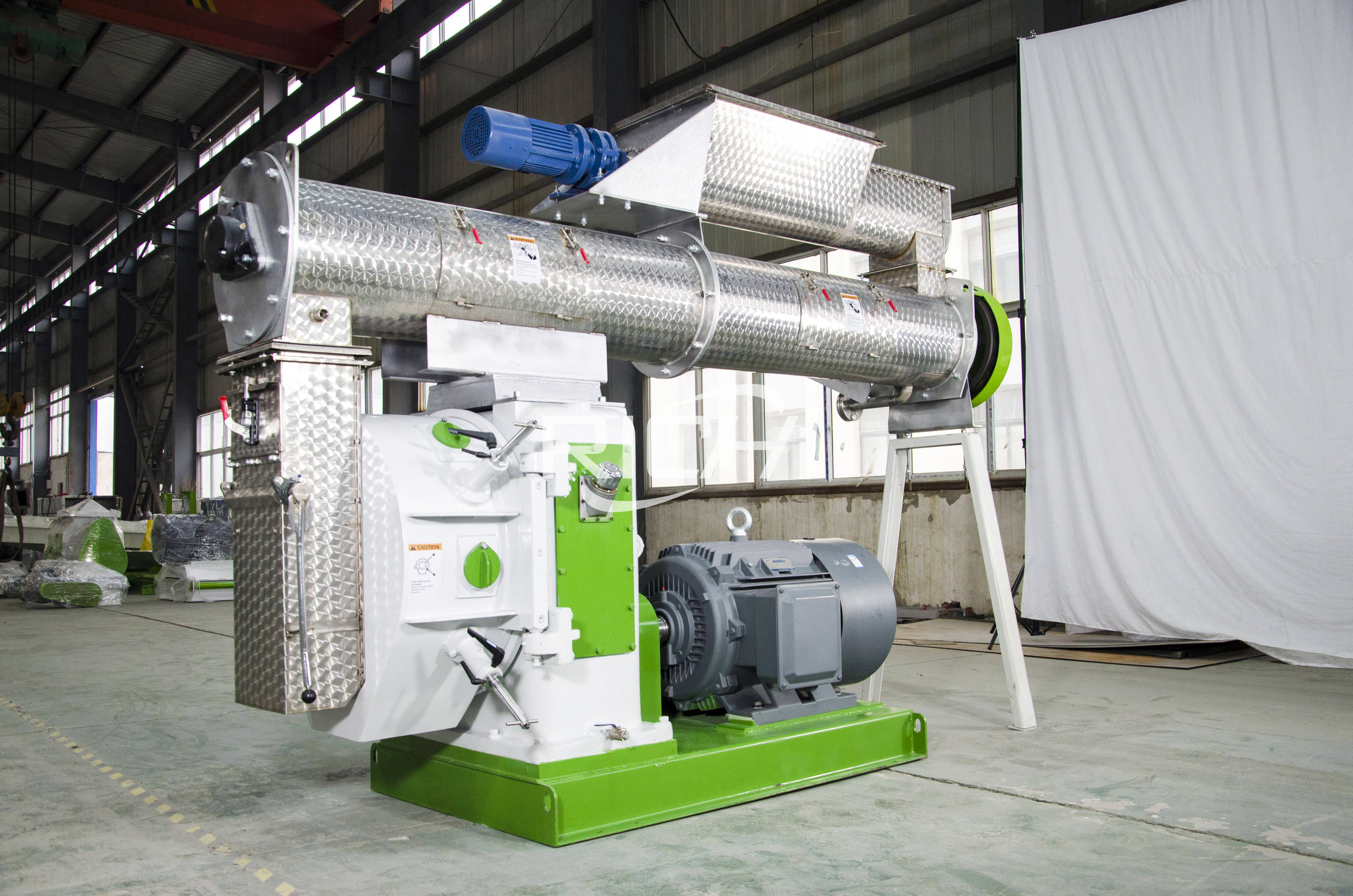
9. How Much Does a Rice Husk Powder Making Machine Cost?
RICHI’s target page lists an ex-factory price range of USD 3,000–35,000 for a single rice husk crusher. The model table shows USD 3,000–5,000 for the 0.5–0.6 t/h SFSP56×40 and up to USD 20,000–35,000 for the 7–8 t/h SFSP66×150. Dust collection, cyclone, blower, screens, conveyors, electrical controls, installation and downstream pelletizing equipment can increase the total project investment.
To compare offers, provide a sample of the actual husk, moisture range, target screen mesh, required accepted powder output, operating hours and whether the powder will be sold or pelletized. Ask the supplier to state the tested output at the specified screen size and identify every auxiliary included in the price. The rice husk powder making machine price and model configuration page provides the product’s published model and project references.
Conclusion
A rice husk powder machine should be selected according to the required particle size and accepted output, not motor power alone. The SFSP range covers approximately 0.5–8 t/h, while screen mesh, husk moisture, contamination, dust collection and downstream use determine the practical configuration. A rice mill selling powder, a biomass pellet plant and a multi-material processor may all need different equipment packages. Testing the actual husk with the target screen is the most reliable way to finalize the machine and avoid a capacity mismatch.
Frequently Asked Questions
What is the price range of a rice husk powder making machine?
Our reference ex-factory price range is USD 3,000–35,000 for a single crusher, depending on model and capacity. Auxiliary equipment such as screens, dust collection, cyclone, blower, conveying and installation may be quoted separately.
What capacity can the rice husk crusher achieve?
The published SFSP range covers approximately 0.5–8 t/h. Actual output depends on rice husk condition, screen mesh, moisture and the required accepted particle size.
What particle size is suitable for rice husk powder?
We use 1–3 mm as a common powder reference and 3–5 mm as a reference for some pelletizing applications. Screen mesh should be selected according to the downstream process and confirmed by testing.
Does rice husk need cleaning before grinding?
When the supply contains stones, metal or other impurities, a cleaning screen and magnetic separation should be considered before grinding. Foreign objects can damage hammers and screens and interrupt production.
Is a dust collector necessary?
Fine powder handling normally requires appropriate dust collection. A cyclone and pulse dust collector help recover product and control airborne dust. Their size should match the system airflow and transfer points.
Can the machine process materials other than rice husks?
Our SFSP crusher can be configured for rice husk, peanut shell, sunflower seed husk, sawdust and wood chips. Capacity and screen selection can differ by material, so representative testing is recommended before confirming a multi-material application.