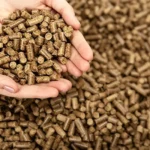


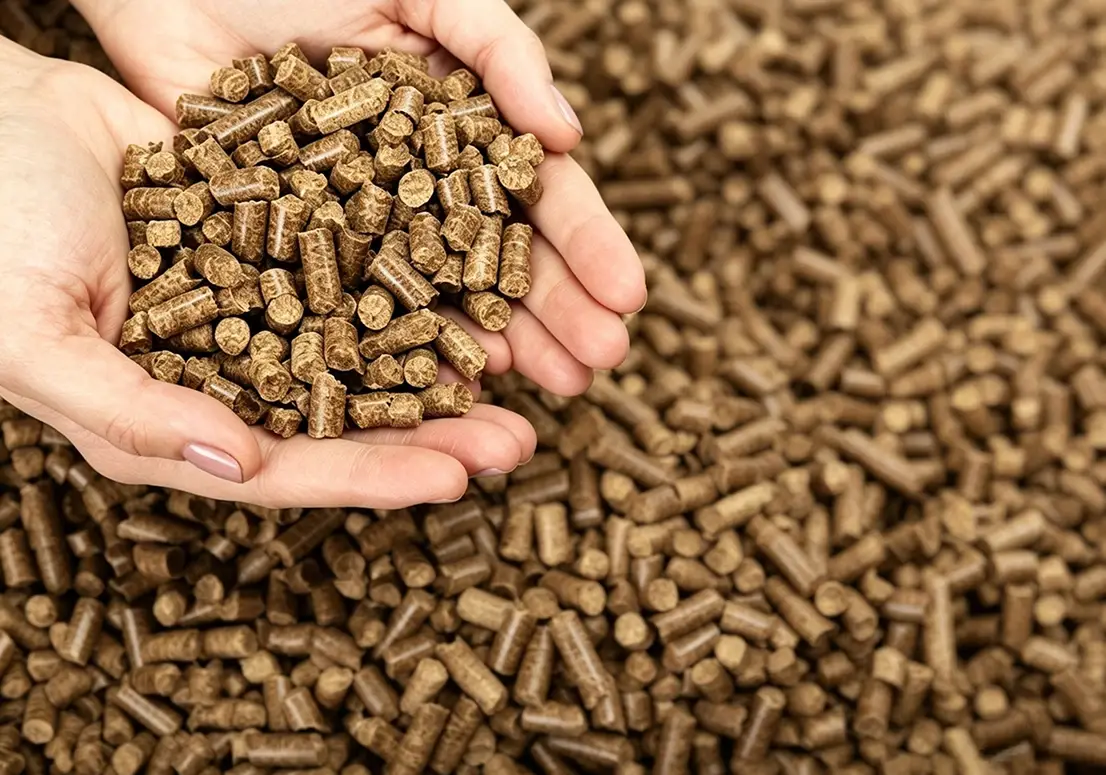
Empty fruit bunches, commonly known as EFB, are one of the major solid biomass residues generated by palm oil mills. After fresh fruit bunches are processed to extract palm oil, large quantities of empty fruit bunches remain. Because EFB contains a high proportion of moisture, long fibers, irregular pieces, and other impurities, it is not always suitable for direct use as a biomass fuel. Pelletizing provides a practical way to convert this bulky palm oil residue into a denser, more uniform, and easier-to-handle biomass fuel.
However, EFB pelletizing is not simply a matter of feeding empty fruit bunches into a pellet mill. A complete production process normally requires several types of equipment to prepare, condition, pelletize, cool, screen, and package the material. The selection and configuration of these machines directly affect pellet quality, production capacity, energy consumption, and operating stability.
So, what equipment is used for EFB pelletizing?
A typical EFB pellet production line may include an EFB receiving system, cleaning equipment, shredder, drying system, crusher or hammer mill, magnetic separator, feeding equipment, pellet mill, cooler, vibrating screen, dust collection system, conveyors, and packing machine. The exact configuration depends on the moisture content, fiber characteristics, required capacity, pellet size, and final application.
This article explains the major equipment used in EFB pelletizing and how each machine contributes to the complete production process.
What Is EFB Pelletizing?
EFB pelletizing is the process of converting empty fruit bunches from palm oil processing into compact cylindrical biomass pellets.
Raw EFB usually has a low bulk density and a highly fibrous structure. It can be difficult to transport, store, and feed into combustion systems in its original form. Pelletizing changes the physical characteristics of the material by compressing prepared EFB through a pellet die.
A typical EFB pelletizing process can be summarized as:
EFB Receiving → Cleaning → Shredding → Drying → Crushing → Fine Grinding → Magnetic Separation → Feeding → Pelletizing → Cooling → Screening → Packaging
Not every project requires exactly the same sequence. For example, some EFB may require intensive shredding because of its long fibers, while other materials may need stronger drying because of their high initial moisture.
The purpose of the equipment is therefore not only to make pellets but also to prepare EFB so that the pellet mill can operate consistently.
1. EFB Receiving and Feeding Equipment
The first equipment in an EFB pellet production line is usually the receiving and feeding system.
Fresh EFB is bulky and irregular. It may arrive directly from a palm oil mill by truck, conveyor, or other transportation system. A receiving hopper or storage bunker provides a temporary storage area before the material enters the processing line.
A properly designed feeding system helps maintain a stable material supply to downstream equipment.
Typical equipment includes:
- Receiving hopper
- Storage bunker
- Belt conveyor
- Chain conveyor
- Screw conveyor
- Bucket elevator
- Automatic feeding system
The feeding system should be designed according to the actual EFB volume and production capacity. If the feeding rate changes significantly, the dryer, grinder, and pellet mill may not operate efficiently.
For large EFB pellet plants, automatic feeding and level control can help reduce manual intervention and improve overall process stability.
2. EFB Cleaning Equipment
Raw EFB can contain foreign materials collected during harvesting, transportation, and palm oil processing.
Common contaminants may include:
- Stones
- Sand
- Soil
- Metal pieces
- Plastic
- Wood fragments
- Other foreign materials
Removing these materials before shredding and grinding is important because they can damage knives, hammers, screens, dies, and rollers.
Cleaning equipment may include vibrating screens, rotary screens, belt-type separators, and other customized separation systems.
The appropriate cleaning method depends on the contamination level of the raw EFB.
For example, if EFB contains significant amounts of soil and small solid contaminants, a screening system may be installed before size reduction. If metal contamination is possible, a magnetic separator should also be considered.
3. EFB Shredder
One of the most important machines in an EFB processing line is the shredder.
EFB has a long and tough fibrous structure. Large empty fruit bunches and long fibers can be difficult for conventional hammer mills to process efficiently. A shredder reduces the size and length of the material before drying and fine grinding.
The main functions of an EFB shredder include:
- Breaking large EFB pieces
- Cutting long fibers
- Reducing material dimensions
- Improving material uniformity
- Preparing EFB for drying
- Reducing the load on downstream grinders
A properly selected shredder can make the subsequent drying and crushing processes more efficient.
The shredding stage is particularly important when the incoming EFB contains long fibers that may wrap around rotating equipment or cause feeding problems.
4. EFB Drying Equipment
Drying is one of the most critical stages in EFB pellet production.
Fresh EFB can contain a high amount of moisture. Excessive moisture makes pellet formation more difficult and increases the energy required for compression. It can also reduce pellet durability and create problems during storage.
An industrial rotary dryer machine is commonly used for large-scale EFB processing.
A typical EFB drying system may include:
- Rotary drum dryer
- Hot air furnace or biomass burner
- Feeding system
- Exhaust system
- Cyclone
- Dust collection equipment
- Temperature control system
The dryer reduces the moisture content of EFB to a level more suitable for pelletizing.
However, drying should not simply aim for the lowest possible moisture content. Excessive drying can waste energy and may negatively affect pellet formation. The target moisture level should be determined according to the EFB characteristics, pellet mill design, pellet diameter, and final application.
Why Is Moisture Control Important?
Moisture affects several stages of EFB pellet production.
If the material is too wet:
- Pellet formation may become unstable.
- The pellet mill may consume more energy.
- Pellets may become soft.
- Pellet durability may decrease.
- Storage problems may occur.
If the material is excessively dry:
- Dust generation may increase.
- Pellet formation may become less stable.
- Energy consumption can rise.
- The material may require additional conditioning.
Therefore, moisture monitoring should be incorporated into the production process rather than relying only on manual estimation.
5. Hammer Mill or EFB Crusher
After shredding and drying, the EFB normally needs additional size reduction.
A hammer mill or biomass crusher can reduce the dried EFB into smaller particles that are more suitable for pelletizing.
The main purposes of crushing include:
- Reducing particle size
- Breaking remaining fibers
- Improving particle uniformity
- Increasing material flowability
- Preparing material for pellet compression
For EFB, the hammer mill must be designed for fibrous biomass rather than relying on equipment intended only for grains.
The selection of screen size, hammer configuration, motor power, and feeding method should be based on the characteristics of the EFB.
6. Fine Grinding Equipment
Depending on the raw material and desired pellet quality, a second-stage fine grinding process may be necessary.
Fine grinding helps create a more consistent particle size distribution. This is particularly useful when producing pellets with a relatively small diameter or when the raw EFB contains a mixture of coarse and fine particles.
Fine grinding can improve:
- Material uniformity
- Die feeding
- Pellet surface quality
- Compression stability
- Pellet density consistency
However, EFB does not necessarily need to be ground into extremely fine powder. Excessive grinding can increase electricity consumption without producing a corresponding improvement in pellet quality.
The correct particle size should therefore be determined according to the pellet specification and pellet mill requirements.
7. Magnetic Separator
A magnetic separator is a relatively small but important piece of equipment in an EFB pelletizing line.
Metal contaminants can enter EFB during harvesting, transportation, maintenance, or handling. If these metal pieces reach the hammer mill or pellet mill, they can cause serious equipment damage.
A magnetic separator can remove ferrous metal contaminants from the material stream before they enter critical equipment.
It may be installed:
- Before the crusher
- Before the hammer mill
- Before the pellet mill
- At multiple points in a large production line
For industrial-scale plants, multiple protection stages can be considered to reduce the risk of unexpected equipment damage.
8. Material Feeding System
After EFB has been cleaned, shredded, dried, and ground, the prepared material needs to enter the pellet mill at a stable rate.
The feeding system is therefore an important part of the pelletizing process.
It may include:
- Screw feeder
- Belt feeder
- Variable-speed feeder
- Hopper
- Agitator
- Automatic level controller
Fibrous biomass can have poor flowability compared with grain-based materials. Long fibers may bridge or form arches inside a hopper.
A properly designed feeding system can reduce these problems and provide a more stable supply of material to the pellet mill.
For large plants, variable-frequency drive control can be used to adjust feeding speed according to production conditions.
9. Palm EFB Pellet Machine
The core equipment in the production line is the pellet machine.
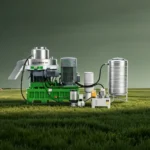
A palm efb pellet machine is designed to compress prepared empty fruit bunch material into cylindrical biomass pellets.
During pelletizing, prepared EFB enters the compression chamber. The rollers press the material through holes in the die. Friction and compression generate the pressure required to form continuous pellets.
The resulting pellets are then cut to the required length.
Important components include:
- Ring die
- Rollers
- Main shaft
- Compression chamber
- Feeding system
- Drive system
- Lubrication system
- Safety protection system
For industrial EFB pellet production, a ring die pellet mill is commonly considered when continuous high-capacity production is required.
The machine should be selected according to:
- EFB moisture
- Particle size
- Required capacity
- Pellet diameter
- Die compression ratio
- Material characteristics
- Operating hours
- Required automation level
Different EFB feedstocks may require different die configurations. A die suitable for one biomass material may not necessarily produce the same result with another material.
(click this link now:https://richipelletizer.com/efb-pellet-machine/)
10. Pellet Mill Die and Roller System
The die and roller system deserves special attention because these components directly participate in pellet formation.
The die determines the pellet diameter, while the compression ratio influences how the material is compacted.
For EFB, die selection should consider the material’s fiber characteristics and moisture level.
A suitable die can help achieve:
- Stable pellet formation
- Consistent pellet diameter
- Appropriate pellet density
- Good production capacity
- Lower risk of blockage
The roller system should also provide sufficient pressure and maintain an appropriate working clearance with the die.
Wear should be monitored regularly because worn rollers and dies can reduce production efficiency and affect pellet quality.
11. Pellet Cooler
Fresh pellets leaving the pellet mill are hot and may still contain residual moisture.
They should normally be cooled before screening and packaging.
A counterflow pellet cooler is commonly used for industrial biomass pellet production.
The cooler performs several functions:
- Reduces pellet temperature
- Removes additional moisture
- Improves pellet hardness
- Stabilizes pellet structure
- Prepares pellets for screening and packaging
Cooling is especially important when pellets will be transported or stored for extended periods.
Packaging warm pellets can result in condensation inside bags or storage containers, potentially affecting pellet quality.
12. Vibrating Screen
After cooling, EFB pellets are usually screened.
A vibrating screen separates finished pellets from:
- Fine powder
- Broken pellets
- Oversized material
- Unwanted particles
The acceptable pellets continue to packaging, while fines can often be recycled back into the pelletizing process.
Screening helps improve the consistency of the final product and reduces the amount of loose dust reaching the customer.
For commercial biomass fuel production, consistent pellet size and low fines content can make transportation, handling, and combustion more convenient.
13. Pellet Packing Machine
If the EFB pellets are intended for commercial sale, a packing machine can be installed at the end of the production line.
Common packaging options include:
- Small bags
- Large bags
- Bulk loading
- Customized industrial packaging
An automatic weighing and packing system can improve packaging accuracy and reduce manual labor.
The appropriate packing method depends on the market and customer requirements.
For industrial customers using pellets directly in biomass boilers, bulk loading may be more practical. For retail or smaller-scale customers, smaller bags may be more appropriate.
14. Dust Collection System
EFB pellet production involves several processes that can generate dust, especially shredding, crushing, grinding, screening, and pellet handling.
A dust collection system helps control airborne particles and maintain a cleaner working environment.
Typical components include:
- Bag filter
- Cyclone
- Dust ducts
- Exhaust fan
- Dust collection hopper
Dust collection is particularly important around hammer mills and screening systems.
A well-designed dust collection system can also help recover valuable fine biomass particles that might otherwise be lost during processing.
15. Conveying Equipment
A complete EFB pelletizing plant requires material transportation between different machines.
Common conveying equipment includes:
Belt Conveyor
Suitable for transporting bulky EFB and finished pellets over relatively long distances.
Screw Conveyor
Suitable for controlled transportation of smaller biomass particles and powders.
Bucket Elevator
Useful for vertical transportation where plant layout requires material to move between different elevations.
Chain Conveyor
Can be used for heavy and bulky biomass materials, particularly in receiving and storage sections.
The conveyor system should match the capacity of the production line. Undersized conveyors can create bottlenecks, while oversized systems may increase investment unnecessarily.
16. Electrical Control System
Modern EFB pellet plants often use centralized electrical control systems to coordinate different machines.
A control system may monitor:
- Motor operation
- Conveyor speed
- Dryer temperature
- Material flow
- Pellet mill load
- Feeding rate
- Equipment alarms
- Emergency shutdowns
Variable-frequency drives can be used to regulate motors and feeding systems.
Automation can help operators maintain stable production and respond more quickly when abnormal conditions occur.
For large turnkey EFB pellet plants, centralized control can integrate the entire production process into one operating system.
17. EFB Storage Equipment
Storage is often overlooked when planning a pelletizing project.
Raw EFB and finished pellets have different storage requirements.
Raw EFB should be protected from unnecessary moisture exposure before processing. If it absorbs additional water, the dryer will need to remove more moisture, increasing energy consumption.
Finished pellets should be kept dry and protected from rain and excessive humidity.
Storage equipment may include:
- Raw material bunker
- Biomass storage shed
- Finished pellet warehouse
- Silo
- Bulk storage system
Good storage design can help maintain consistent production throughout the year.
18. Complete EFB Pelletizing Line
Although individual machines are important, EFB pellet production should be considered as a complete system.
A typical production configuration may look like this:
Raw EFB → Receiving Hopper → Cleaning → Shredding → Drying → Crushing → Fine Grinding → Magnetic Separation → Storage/Buffer Hopper → Feeding → Palm EFB Pellet Machine → Cooling → Screening → Packing
Dust collection, conveyors, electrical controls, and safety systems support the entire process.
The exact configuration should be customized according to the raw material and production requirements.
For example, a small EFB pellet project may use a relatively simple process, while a large palm oil mill with continuous EFB output may require automated receiving, multiple dryers, large-capacity shredders, advanced grinding systems, and automatic packaging.
(
How to Choose EFB Pelletizing Equipment
Choosing EFB pelletizing equipment should begin with the raw material rather than the pellet machine alone.
1. Analyze EFB Moisture
Determine the moisture content of fresh EFB before selecting the dryer.
2. Check Fiber Characteristics
Long and tough fibers may require a dedicated shredding stage.
3. Determine Required Capacity
The capacity of every major machine should be coordinated. A 10 T/H pellet mill, for example, requires upstream equipment capable of continuously supplying enough prepared material.
4. Select the Pellet Diameter
Common biomass pellet diameters may vary depending on the intended application. The die should be selected according to the customer’s fuel requirements.
5. Consider Final Application
Pellets intended for industrial boilers may have different specifications from those intended for commercial biomass fuel markets.
6. Consider Automation Requirements
A highly automated line can reduce manual operation and help maintain stable production, but the investment level will also be higher.
7. Consider Maintenance
Wear parts such as dies, rollers, hammers, screens, and cutting components should be easy to inspect and replace.
What Affects the Performance of EFB Pelletizing Equipment?
Equipment selection is only one factor affecting production performance.
Several operating conditions also matter.
Moisture Content
Moisture has a direct influence on compression and pellet durability.
Particle Size
Large particles and long fibers can interfere with stable die feeding.
Die Compression Ratio
An inappropriate compression ratio can result in unstable pellet formation or excessive energy consumption.
Feeding Stability
Irregular feeding can cause fluctuations in pellet mill load.
Roller and Die Clearance
Incorrect clearance may reduce pelletizing efficiency and accelerate wear.
Cooling Efficiency
Insufficient cooling can affect pellet stability and storage quality.
Screening Efficiency
Poor screening can allow excessive fines into the finished product.
Therefore, good EFB pellet production depends on the coordination of raw material preparation, equipment selection, operating parameters, and maintenance.
Why a Complete EFB Pelletizing System Is Important
Buying a pellet machine alone does not necessarily solve all EFB processing problems.
EFB has unique characteristics compared with sawdust, wood chips, rice husks, and other biomass materials. Its high moisture content and fibrous structure mean that pretreatment is often essential.
A complete system can coordinate:
- Raw material handling
- Cleaning
- Shredding
- Drying
- Grinding
- Feeding
- Pelletizing
- Cooling
- Screening
- Packaging
This approach allows the equipment capacity and operating parameters to be matched throughout the entire production process.
For a palm oil mill, this can also provide a way to integrate EFB utilization into the existing biomass management system.
EFB Pelletizing Equipment for Different Production Scales
The equipment configuration can vary significantly depending on the desired output.
Small-Scale EFB Pellet Production
A smaller project may require:
- Simple feeding system
- EFB shredder
- Small dryer
- Crusher
- Pellet mill
- Cooler
- Screen
- Manual or semi-automatic packing
The system can be designed with relatively simple material handling.
Medium-Scale Production
A medium-capacity project may require:
- Automatic feeding
- High-capacity shredder
- Rotary dryer
- Hammer mill
- Magnetic separator
- Ring die pellet mill
- Counterflow cooler
- Vibrating screen
- Automatic packing
- Centralized control
Large-Scale EFB Pellet Plant
Large commercial plants may require multiple processing units and a higher degree of automation.
The system may include:
- Automated EFB receiving
- Large storage bunker
- Heavy-duty shredding
- Multi-stage drying
- High-capacity grinding
- Automatic material distribution
- Multiple pellet mills
- Efficient cooling
- Automatic screening
- Bulk loading
- Dust collection
- Centralized PLC control
The final configuration should be based on actual raw material availability and the desired production capacity rather than using a standard equipment list for every project.
Common Problems When Selecting EFB Equipment
Several mistakes can affect EFB pellet production.
Choosing a Pellet Mill Without Testing the Raw Material
A pellet mill should be selected based on actual EFB characteristics.
Underestimating the Dryer
Because EFB can contain substantial moisture, insufficient drying capacity can become a major production bottleneck.
Ignoring Fiber Length
Long fibers can cause feeding and grinding problems.
Using Undersized Conveyors
Insufficient conveying capacity can reduce the effective output of the entire plant.
Not Including Dust Collection
Dust generated by grinding and screening should be managed as part of the plant design.
Ignoring Storage
Moisture reabsorption can negatively affect prepared EFB and finished pellets.
Focusing Only on Machine Price
The lowest equipment purchase price does not necessarily mean the lowest production cost. Electricity consumption, wear parts, maintenance, labor, downtime, and production stability should also be considered.
How RICHI Can Design an EFB Pelletizing Solution
EFB pellet production is a system engineering project rather than simply a pellet mill purchase.
A complete solution can begin with analysis of:
- EFB source
- Initial moisture
- Fiber structure
- Available raw material quantity
- Required pellet capacity
- Pellet diameter
- Final fuel application
- Available factory space
- Energy source
- Automation requirements
Based on these factors, the equipment configuration can be developed from raw material receiving through final packaging.
A complete EFB pelletizing project may integrate shredding, drying, crushing, grinding, pelletizing, cooling, screening, conveying, dust collection, and packaging into one coordinated production line.
This approach can help ensure that the upstream preparation equipment matches the capacity of the pellet mill and that downstream cooling and screening systems can handle the pellet output.
(view website: RICHI Pelletizer)
Final Thoughts
EFB pelletizing requires more than a single machine. Because empty fruit bunches are fibrous, bulky, and often contain considerable moisture, the raw material must usually be properly prepared before it enters the pelletizing stage.
The main equipment used in an EFB pellet production line can include an EFB receiving system, cleaner, shredder, rotary dryer, crusher, hammer mill, magnetic separator, feeding system, palm efb pellet machine, pellet cooler, vibrating screen, dust collector, conveyors, electrical control system, and packing machine.
Each machine has a specific role. Shredders reduce long fibers, dryers control moisture, crushers and hammer mills improve particle size, the pellet mill forms compact pellets, the cooler stabilizes the product, and screening removes fines before packaging.
The best equipment configuration depends on the characteristics of the EFB and the customer’s production requirements. A properly engineered complete line should balance capacity, moisture control, particle size, pellet quality, energy consumption, maintenance requirements, and automation.
For palm oil mills and biomass fuel producers, converting EFB into pellets can turn a bulky processing residue into a standardized and easier-to-handle biomass fuel. With the right pretreatment equipment and a properly selected pelletizing system, EFB can be processed into pellets suitable for transportation, storage, and biomass energy applications.


