

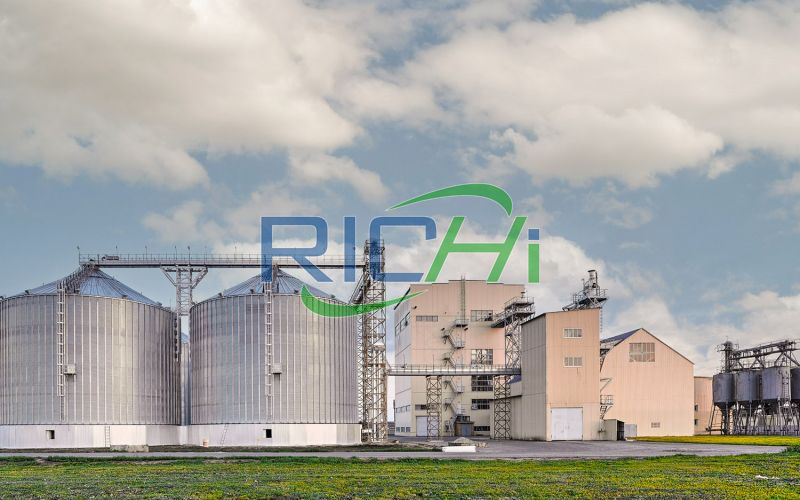
If you’ve been thinking about building a poultry feed plant, you’ve probably run into the same problem everyone runs into. The numbers are all over the place. One person tells you a small line can be set up for the price of a used truck. Another says you need a six-figure budget before you even start. Neither of them is wrong. They’re just talking about different things.
The truth is that a poultry feed plant is not a single product with a single price tag. It’s a system built around your operation. What it costs depends on how much feed you need to produce, what ingredients you’re using, how much automation you want, and how much of the work you’re prepared to do yourself. The only way to get a useful answer is to understand what drives the cost. Then you can decide what makes sense for your situation.
Start With Capacity
The first question is always capacity. How many tons of feed do you need to produce per hour? Or per day? That number determines the size of every piece of equipment in the line.
A small plant might produce one to two tons per hour. That’s enough for a farm with a few thousand birds, or for a small commercial operation selling to nearby farms. A larger plant might produce five to ten tons per hour. That’s a commercial-scale facility serving multiple customers or a large integrated operation.
The price scales with capacity, but not in a straight line. A plant that produces twice as much does not cost twice as much. Larger equipment is more efficient per ton of output. The motor is bigger, but it’s not double the price. The die is larger, but it’s not double the cost. The building is bigger, but the incremental cost is lower. This means that larger plants have a lower cost per ton of capacity. But they also require a larger upfront investment and a larger market to justify the scale.
What Goes Into the Line
A poultry feed plant is not just a pellet mill. It’s a complete line of equipment that prepares ingredients, mixes them, conditions them, pellets them, cools them, and screens them. Each piece of equipment adds to the cost.
The grinder is the first step. It reduces grains and other ingredients to a consistent particle size. A hammer mill is the most common choice. The size and power of the grinder depend on the capacity of the line.
The mixer blends the ground ingredients with protein meals, minerals, vitamins, and other additives. The mixer must be sized to match the grinder and the pellet mill. If the mixer is too small, it becomes a bottleneck. If it’s too large, it adds unnecessary cost.
The conditioner adds steam to the mixed material. This softens the particles and activates the natural binders. The conditioner is a relatively small part of the total cost, but it has a big impact on pellet quality.
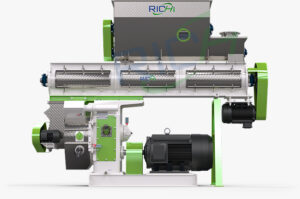
The pellet mill is the heart of the line. This is where the material is compressed into pellets. The pellet mill is one of the most expensive components. The die and rollers are wear items that need periodic replacement, so the quality of the pellet mill affects both the initial cost and the ongoing cost.
The cooler reduces the temperature of the pellets after they emerge from the mill. Hot pellets are soft and prone to breakage. Cooling hardens them and prepares them for storage.
The screener removes fines and broken pellets. The fines are recycled back into the process. Screening improves the quality of the final product.
The poultry feed plant price Question
When you start asking about the poultry feed plant price, you’ll quickly learn that the number depends on what’s included. Some suppliers quote the pellet mill alone. Some quote the pellet mill and the cooler. Some quote a complete line with all the supporting equipment.
It’s important to know what’s included. A complete line includes the grinder, mixer, conditioner, pellet mill, cooler, screener, conveyors, bins, electrical controls, and structural steel. It also includes design, engineering, shipping, installation, and commissioning. If any of those things are missing from the quote, you’ll need to add them to your budget.
The price also depends on the level of automation. A manual line requires operators to monitor and adjust the equipment. An automated line uses sensors and controls to manage the process with minimal intervention. Automated lines cost more upfront, but they reduce labor costs and improve consistency. For a large plant, automation is usually worth the investment. For a small plant, a manual or semi-automatic line may be sufficient.
Related articles:https://pelletizerextruder.com/poultry-feed-production-line/
The Building and Infrastructure
The equipment is only part of the cost. You also need a place to put it. That means a building with a foundation, electrical supply, and space for material storage. The cost of the building depends on its size, its construction, and its location.
If you already have a suitable building, you can save a significant amount. If you need to build from scratch, the cost can be substantial. The building must be large enough to house the equipment and allow for maintenance access. It must have adequate ventilation and dust control. It must have the electrical capacity to run the motors and controls.
You also need space for raw material storage and finished product storage. Ingredients like corn and soybean meal are typically stored in bins or silos. Finished pellets are stored in bins or bags. The storage capacity you need depends on how often you receive ingredients and how quickly you ship finished product.
The Operating Costs
The purchase price is just the beginning. The total cost of ownership includes electricity, labor, maintenance, and replacement parts. These ongoing costs can be greater than the initial investment over the life of the plant.
Electricity is a major cost. Pelleting is energy-intensive. The grinder, the pellet mill, and the cooler all consume power. The energy cost per ton of feed depends on the efficiency of the equipment and the local price of electricity.
Labor is another cost. A manual line requires more operators than an automated line. The labor cost depends on the local wage rate and the skill level required. Training is important. An operator who understands the equipment can keep it running efficiently. An operator who doesn’t can cause downtime and poor quality.
Maintenance is a regular expense. Dies and rollers wear out. Bearings need lubrication. Belts need replacement. A plant that is well-maintained will have lower long-term costs and less downtime. A plant that is neglected will have higher costs and more breakdowns.
The Payback Period
The payback period is the time it takes for the savings or revenue from the plant to cover the initial investment. For a poultry feed plant, the payback period depends on several factors.
If you’re producing feed for your own birds, the savings come from the difference between the cost of producing feed and the cost of buying it. If you’re selling feed, the revenue comes from the sale of the finished product. The payback period also depends on the utilization rate. A plant that runs at full capacity will pay back faster than one that runs intermittently.
For many operations, the payback period is two to four years. After that, the plant generates ongoing savings or income. The equipment has a useful life of ten to fifteen years or more with proper maintenance. So the long-term return can be substantial.
What to Look For in a Supplier
The supplier you choose affects the cost and the quality of the plant. A supplier with experience in poultry feed production can help you design a line that meets your needs. They can recommend the right equipment, the right capacity, and the right level of automation. They can also provide installation, training, and support.
It helps to ask for references. Talk to other producers who have bought similar equipment. Ask about the quality of the equipment, the reliability of the supplier, and the level of support they received. A supplier who is recommended by other producers is a safer choice than one who is not.
It also helps to visit an installation if you can. See the equipment in operation. Talk to the operators. Watch how the line runs. Ask about maintenance and downtime. A firsthand look will tell you more than any brochure.
If you’re looking for a pellet line for sale, make sure you understand exactly what the seller is offering. Is it a complete line or just the pellet mill? Does it include installation and training? What kind of support is available after the sale? These questions will help you compare offers and avoid surprises.
For more detailed information on equipment specifications, capacity options, and supplier comparisons, click here to read the resources that can help you make an informed decision. The right plant will pay for itself. The wrong plant will cost you more than you expected. The difference is in the research you do before you buy.