




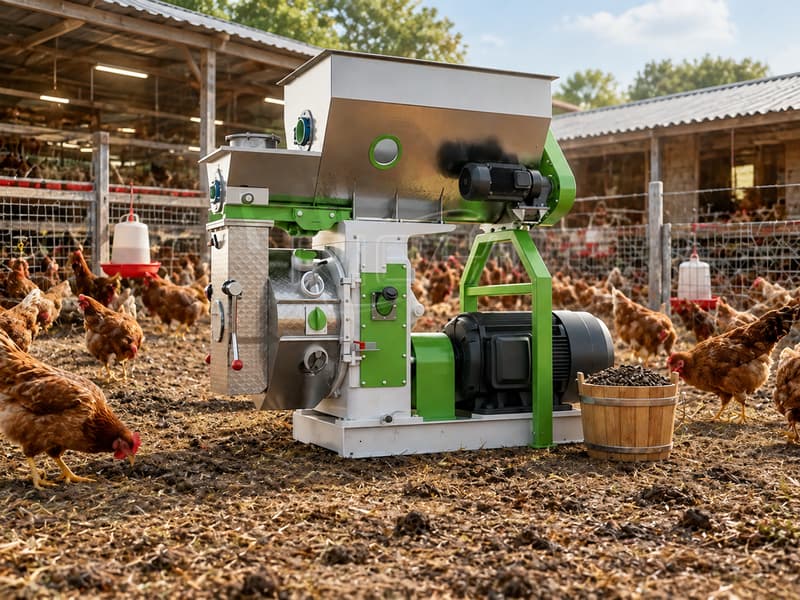
A fertilizer factory can produce several tons of pellets per hour and still struggle commercially if the finished product is inconsistent.
Customers notice powder.
They notice broken pellets.
They notice excessive moisture.
They notice bags that contain too much dust or material that falls apart during transportation.
This is why pellet quality is often more important than headline capacity.
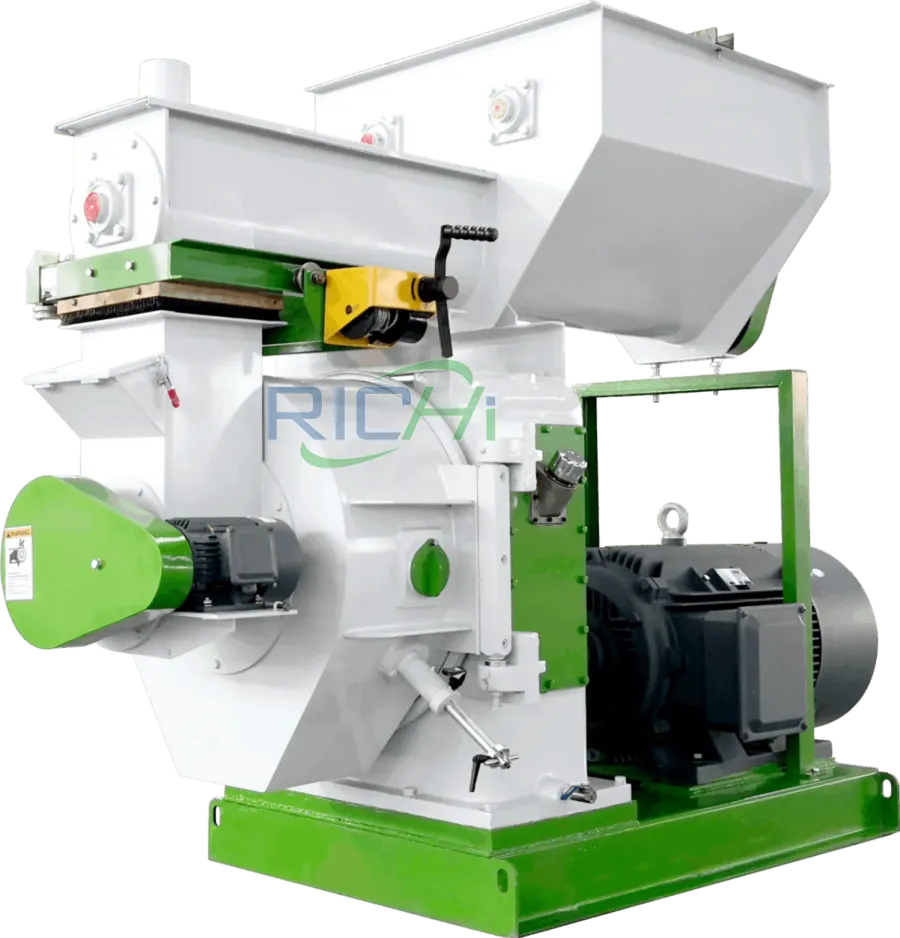
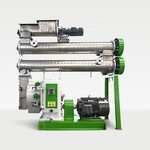
For businesses developing a manure fertilizer product, a chicken manure pellets machine is only one element of the quality equation. The final result depends on everything from raw-material preparation to cooling and packaging.
A strong production process is therefore built around consistency rather than maximum output alone.
What Does a Good Fertilizer Pellet Look Like?
There is no single appearance standard for every market.
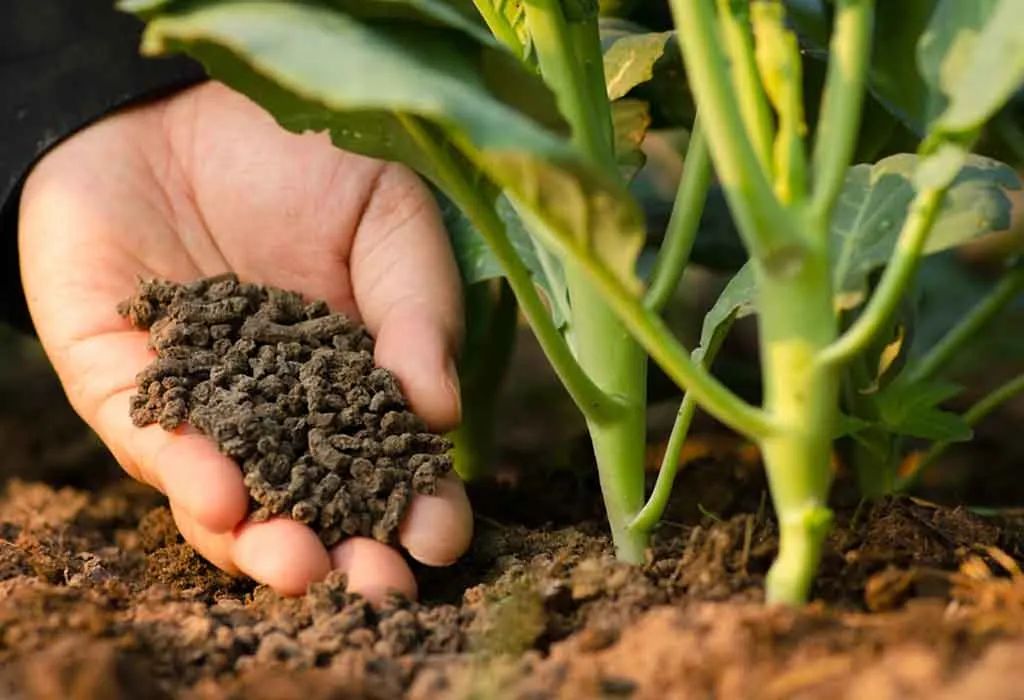
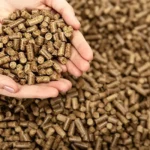
However, commercial fertilizer pellets generally need to be reasonably uniform in size and shape, sufficiently durable for handling, and stable during storage.
These characteristics make the product easier to package, transport, and apply.
The quality target should be defined according to how the fertilizer will be sold and used.
A farm-oriented bulk product may focus heavily on durability and spreading behavior.
A retail product may additionally require consistent appearance, clean packaging, and low dust.
The production line must be designed around these expectations.
Moisture and Pellet Formation
Moisture has a direct influence on the forming process.
When material is too wet, it may become sticky and resist controlled feeding.
When it is too dry, the material may not compact efficiently.
The challenge is finding the operating range where the material can move through the forming system consistently and create stable pellets.
This is why the drying stage deserves careful attention.
Instead of simply reducing moisture as much as possible, the objective is to prepare the feedstock for the next stage.
Over-drying can waste energy and may make the material unnecessarily difficult to process.
Particle Size Is Equally Important
Uniform particle size helps create more consistent pellets.
Large particles may interrupt the flow of material through the compression area. Very fine particles may behave differently and require another operating approach.
A grinder or crusher can therefore play a critical role.
The purpose is not simply to reduce everything to dust.
The aim is to produce a particle structure that allows the downstream equipment to work smoothly.
The correct particle size depends on the formulation and pellet dimensions being produced.
The Importance of Mixing
Many commercial fertilizers contain more than one ingredient.
A manufacturer may blend poultry manure with cow manure, plant residues, compost-based materials, or selected additives.
Once several materials are combined, mixing becomes a major quality-control point.
If the ingredients are not distributed evenly, the chemical and physical characteristics of individual pellets may differ.
A customer receiving one bag should ideally get the same product composition as a customer receiving another bag.
That consistency begins in the mixer.
Pellet Density Affects Handling
Pellet density influences transportation and application.
If pellets are too soft, they can break during handling.
If they are excessively compact, the forming process may require more energy than necessary and the final product may not match the intended application characteristics.
The machine settings, die configuration, formulation, moisture, and feeding rate all influence pellet structure.
A stable process therefore requires operators to monitor more than output.
They should watch the physical condition of the product as the plant runs.
Why Cooling Should Never Be Treated as Optional
Cooling is sometimes overlooked because the pellets have already been formed.
But forming creates heat.
If warm pellets are packed immediately, residual heat and moisture can create conditions that are unfavorable for storage.
A cooling section allows the pellets to stabilize before screening and packaging.
This is especially important for businesses shipping fertilizer over long distances.
The product may spend days in warehouses or transport vehicles before reaching its final customer.
A fertilizer that leaves the factory in unstable condition can create problems later that are difficult to solve.
Screening Creates a Cleaner Final Product
A commercial fertilizer line should not assume that every pellet leaving the forming section has exactly the desired size.
That is why screening is valuable.
Oversize particles can be removed.
Fines can be separated.
Properly formed pellets can proceed to packaging.
In many systems, fines are recycled into the process.
This not only improves product consistency but also reduces material loss.
From a customer’s perspective, lower dust and more uniform pellets generally create a better experience during bag opening, transportation, and application.
What Does Packaging Have to Do with Pellet Quality?
More than many producers expect.
Even good pellets can deteriorate when packaging does not protect them from moisture.
Bag material, sealing quality, storage conditions, and warehouse humidity all influence the final customer experience.
The factory should therefore consider packaging as part of the production chain rather than as a completely separate activity.
For retail products, packaging also communicates important information such as application guidance, product composition, storage recommendations, and batch details.
A professional packaging process can strengthen the perception of product consistency.
(Related Post:https://www.richipelletmill.com/organic-fertilizer-production-line/)
How Plant Capacity Affects Product Quality
Increasing throughput can place pressure on every stage.
If raw material enters faster than the dryer can process it, moisture rises.
If the mixer cannot blend materials consistently, formulation changes.
If the pelletizer is overloaded, pellet shape may become unstable.
If the cooler is undersized, finished pellets may remain too warm.
If the screen cannot handle the output, fines accumulate.
This means capacity is not just a pelletizer number.
The entire line must be balanced.
That is why a complete pellet mill for sale should never be evaluated only by its nominal hourly output. The upstream and downstream equipment must support the same production target.
Can One Machine Handle Different Organic Materials?
In many cases, the equipment can process a range of formulations, but the operating conditions may need adjustment.
Different manure types and biomass ingredients have different moisture, fiber, density, and flow characteristics.
A formula containing a high proportion of fibrous material may behave differently from a more homogeneous manure-based mixture.
Therefore, flexibility does not mean “one setting fits everything.”
Practical flexibility comes from having an adjustable production process.
That can include controlled moisture addition, variable feeding, appropriate conditioning, suitable die configurations, and repeatable operating procedures.
Quality Starts Before the Material Reaches the Machine
This may be the most important principle.
Poorly prepared material cannot be rescued completely by a high-end pelletizer.
If foreign materials remain, particle size varies widely, or moisture changes dramatically, production will remain unstable.
That is why the best quality strategy begins at raw-material receiving.
The plant should have clear procedures for inspection, storage, preparation, and blending.
Consistency in the input creates consistency in the output.
How Manufacturers Can Create a Repeatable Product
Once a workable formulation has been developed, the operator should document the main production parameters.
These may include raw-material moisture, particle size, feeding rate, mixer settings, pelletizer conditions, cooling performance, and screening results.
The objective is repeatability.
If a successful batch can be reproduced, production becomes easier to manage.
This is especially valuable for commercial fertilizer businesses that supply distributors or agricultural customers on a regular basis.
A repeatable process also makes troubleshooting easier.
When a problem appears, operators can compare the current batch with previous successful production runs and identify where conditions changed.
Small Changes Can Have Large Effects
Organic fertilizer production is a process of balance.
A small change in moisture can affect pellet formation.
A change in particle size can influence energy consumption.
A different manure source may alter flow behavior.
A new additive may require adjustments to mixing.
Even seasonal weather conditions can change drying requirements.
This is why production experience matters.
The objective is not to find a perfect machine that eliminates all variables. The objective is to build a system in which important variables can be measured and controlled.
The Role of Supplier Support
Equipment support becomes especially useful during project commissioning.
A supplier with experience in organic fertilizer systems should be able to explain how the plant responds to changes in moisture, formulation, or throughput.
For producers researching equipment providers, Richi manufacture can be included among the search terms used to investigate pelletizing machinery, factory capabilities, and processing solutions.
The more useful question, however, is what technical support is included with the equipment.
Can the supplier assist with process design?
Can the machine be tested using the customer’s material?
Are spare parts available?
Is commissioning support provided?
These practical questions often have more value than marketing language.
Where to Research Before Making Equipment Decisions
The internet contains a large amount of general information about fertilizer pellets, but not all content explains the actual production process in sufficient detail.
Readers comparing technologies can use helpful resources to study drying methods, pelletizing concepts, material preparation, storage practices, and complete organic fertilizer lines.
The goal should be to understand the process before comparing individual machine prices.
A low-priced machine may become expensive if the surrounding process is poorly matched.
The Final Product Should Drive the Process
There is a tendency in machinery purchasing to start with equipment.
A better approach is to start with the product.
Define the pellet size.
Define the expected durability.
Define the packaging format.
Define the target customer.
Define the required daily output.
Then work backward through the process to determine what raw-material preparation and equipment are necessary.
This approach reduces guesswork.
From Raw Waste to Consistent Agricultural Product
Manure starts as a variable material.
It becomes more valuable when the production system creates consistency.
Drying controls moisture.
Grinding controls particle structure.
Mixing controls formulation.
Pelletizing controls physical form.
Cooling improves stability.
Screening controls size distribution.
Packaging protects the finished product.
Each stage contributes to the final result.
That is why high-quality organic fertilizer is not the product of a single machine. It is the result of a coordinated process.
For agricultural businesses trying to commercialize manure-based fertilizer, that difference can determine whether the final product remains a low-value by-product or becomes a practical, recognizable agricultural commodity.
The machine matters.
But the process matters more.