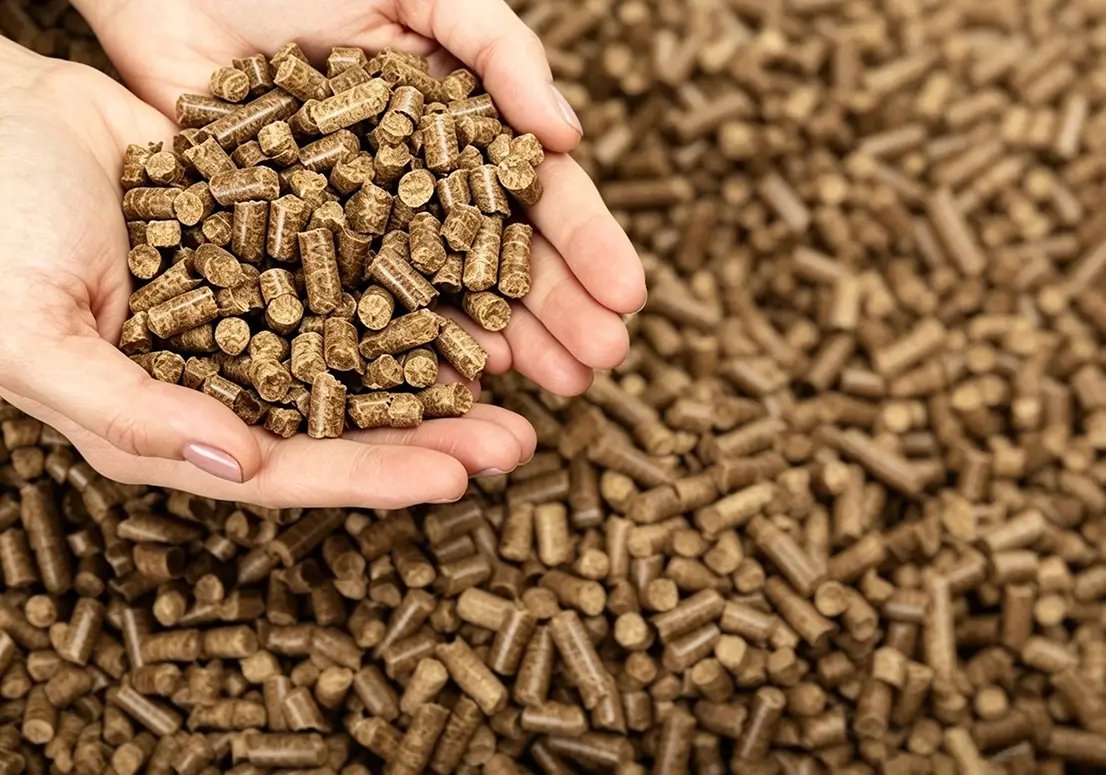






Biomass fuel production is becoming an important way to convert forestry residues, wood processing waste, agricultural residues, and other renewable materials into useful energy products. Wood chips, sawdust, wood shavings, bark, branches, and other wood residues can be processed into pellets, briquettes, or other solid biomass fuels.
However, one of the most important factors affecting biomass fuel production is moisture content. Wood materials with excessive or uneven moisture can create problems during crushing, pelletizing, briquetting, storage, transportation, and combustion. For this reason, industrial wood drying is an essential part of many biomass fuel production systems.
A properly designed drying process removes excess water from wood materials and creates a more consistent feedstock for downstream processing. Equipment such as a rotary dryer, drum dryer, or specialized wood powder dryer can be integrated into a biomass fuel production line according to the raw material, particle size, capacity, and target moisture content.
This article explains how wood drying supports biomass fuel production, why moisture control matters, what factors influence drying performance, and how to choose a suitable drying system.
Why Is Wood Drying Important for Biomass Fuel Production?
Fresh wood and wood processing residues naturally contain a certain amount of moisture. The actual moisture level can vary considerably depending on the type of material, storage conditions, season, wood species, and processing method.
For example, freshly processed wood chips may contain much more water than dry sawdust obtained from an indoor woodworking process. Outdoor-stored residues can also absorb moisture from rain and humid air.
If this material is sent directly into a biomass fuel production line, several problems may occur.
First, excessive moisture increases the weight of the material without increasing its usable dry biomass content. This affects transportation and handling efficiency.
Second, wet material is generally more difficult to process into stable pellets or briquettes. Water changes the physical properties of the feedstock and can interfere with compression and forming.
Third, moisture directly affects the combustion performance of solid biomass fuel. Water must be evaporated before the fuel can release its full energy during combustion.
Therefore, drying is not simply a preparation step. It is an important process for improving the overall consistency and usability of biomass fuel.
How Moisture Affects Biomass Fuel Quality
Moisture has a direct relationship with the energy content of biomass fuel.
When a biomass pellet contains excessive water, part of the combustion energy is consumed to heat and evaporate that water. As a result, less useful energy is available for heating or industrial applications.
High moisture can also affect ignition. Wet fuel generally requires more heat to reach effective combustion conditions and may burn less consistently.
For pellet producers, moisture is also important before pelletizing. Wood pellets are usually produced within a controlled moisture range, although the appropriate range depends on the wood species, particle size, pellet mill design, die compression ratio, and other production conditions.
If the feedstock is too wet, pellet formation may become unstable. If it is excessively dry, the material may also lose some of the natural binding conditions needed during compression.
The goal is therefore not to remove as much moisture as possible. The goal is to reach a suitable and relatively uniform moisture level for the next processing stage.
Wood Drying in a Biomass Fuel Production Line
A typical wood pellet fuel production line may include several major processes:
- Raw material receiving and storage
- Cleaning and separation
- Chipping or coarse crushing
- Fine grinding
- Drying
- Pelletizing
- Cooling
- Screening
- Packing
- Finished fuel storage
The exact process depends on the raw material.
For example, logs and branches may first need a wood chipper. Wood chips may then be crushed or ground into smaller particles. Sawdust may require less size reduction before drying.
After preparation, the material enters the drying system. The dryer reduces moisture to the required level before the material is sent to the pellet mill.
This arrangement creates a more stable production process because the pellet mill receives feedstock with more consistent moisture.
How an Industrial Wood Dryer Works
Industrial wood dryers generally use controlled hot air to transfer heat to wet biomass materials.
A typical rotary drying system includes a feeding device, rotary drum, heat source, exhaust fan, dust collection equipment, conveying equipment, and control system.
Wet material enters the rotating drum through the feeding section. As the drum rotates, internal lifting flights continuously lift and distribute the material.
At the same time, heated air passes through the dryer. Depending on the dryer configuration, the hot air can contact the biomass directly or transfer heat through an indirect system.
Heat causes water inside the wood particles to migrate toward the surface. The moisture then evaporates into the surrounding air.
The humid air is continuously removed through the exhaust system, while the dried material gradually moves toward the discharge end.
The drying process is affected by several parameters, including:
- Initial moisture content
- Target moisture content
- Material particle size
- Feed rate
- Hot air temperature
- Airflow
- Residence time
- Drum speed
- Material bulk density
- Heat source capacity
- Exhaust efficiency
A well-designed system needs to balance these factors rather than relying on temperature alone.
(Related machine:https://pelletisingmachine.com/sawdust-dryer-machine/)
Why Particle Size Matters During Wood Drying
Particle size has a major influence on drying performance.
Large wood pieces have a relatively small surface area compared with their volume. Water inside the material therefore has a longer path to travel before reaching the surface.
Smaller particles generally have a greater surface-area-to-volume ratio. This allows heat to contact more of the material surface and can accelerate moisture evaporation.
This is one reason why biomass fuel plants often include crushing or grinding before drying.
For example, a production line processing large branches may use a chipper to reduce the material into wood chips. A hammer mill can then further reduce the particle size if necessary.
However, smaller is not always better.
Excessive grinding consumes additional electricity, increases dust generation, and may reduce the efficiency of subsequent handling. The appropriate particle size should therefore be selected according to the requirements of the dryer and the final biomass fuel product.
Drying Sawdust for Biomass Fuel
Sawdust is one of the most common raw materials for wood pellet production.
Because sawdust particles are already relatively small, the drying process can be different from drying logs or large wood chips. Sawdust has a large surface area, which can promote rapid moisture transfer, but its low bulk density and fine particle structure can also create challenges.
Very fine sawdust may be easily carried by the airflow inside a dryer. Excessive airflow can increase material loss and place greater demands on dust collection.
This is why the dryer needs to be matched to the physical characteristics of the sawdust.
For applications requiring the drying of fine wood powder or very small biomass particles, a wood powder dryer can be considered as part of the drying system. The system should be designed around the actual material characteristics rather than simply selecting a dryer based on nominal capacity.
Important parameters include particle size distribution, moisture content, bulk density, required evaporation rate, airflow, and final moisture target.
Drying Wood Chips for Biomass Fuel
Wood chips are another important biomass fuel feedstock.
They can come from forestry operations, sawmills, furniture factories, wood processing plants, tree trimming operations, and other sources.
Wood chips are generally larger than sawdust, so drying performance depends strongly on chip dimensions and uniformity.
Oversized chips can take longer to dry because moisture must travel from deeper inside the material. Extremely irregular chips may also create uneven residence times inside the dryer.
Therefore, a crushing or screening stage may be useful before drying.
A typical process can be:
Wood residues → Chipping → Crushing → Screening → Drying → Pelletizing → Cooling → Screening → Packing
The exact configuration can be adjusted according to the raw material.
Controlling the Drying Temperature
Temperature is one of the most visible parameters in a wood drying system, but higher temperature does not automatically mean better drying.
If the temperature is too low, moisture removal may be slow and the dryer may require a longer residence time.
If the temperature is excessively high, several problems can occur. The material may become over-dried, energy consumption may increase, and the risk of thermal degradation or fire can become more significant depending on the material and system design.
A good drying system should provide stable and controllable thermal conditions.
The appropriate operating temperature depends on the material, moisture level, dryer design, airflow, feed rate, and final application.
For biomass pellet production, the objective is generally to reach the moisture range required by the pelletizing process rather than achieving the lowest possible moisture content.
Why Uniform Moisture Is Important
Average moisture content alone does not tell the whole story.
Imagine a batch of sawdust with an average moisture content that appears suitable for pelletizing. If some particles are very wet while others are extremely dry, the actual pelletizing performance may still be inconsistent.
Uneven moisture can result in:
- Unstable pellet formation
- Variable pellet density
- Increased fines
- Inconsistent pellet durability
- Changes in pellet mill power consumption
- Fluctuations in production rate
Good material mixing, appropriate airflow distribution, proper dryer design, and effective residence-time control can help improve moisture uniformity.
Moisture measurement at both the dryer inlet and outlet is also useful for process control.
How Drying Supports Pelletizing
Drying and pelletizing are closely connected.
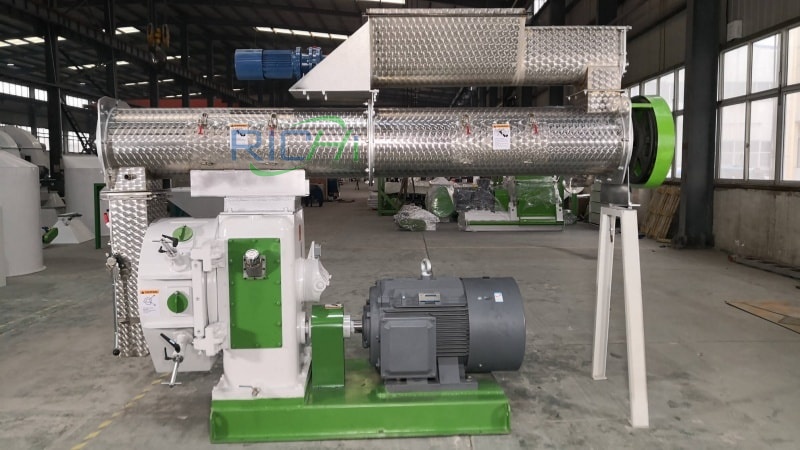
A pellet mill compresses prepared biomass through holes in a die to form cylindrical fuel pellets. The material needs suitable physical and moisture properties to pass through the die and form stable pellets.
When feedstock contains excessive moisture, it may create difficulties in compression and increase the risk of unstable operation.
Properly dried biomass can provide more predictable pelletizing conditions.
However, drying should not be considered the only factor determining pellet quality. Grinding, raw material composition, die compression ratio, roller condition, feeding rate, conditioning, cooling, and screening also affect the final product.
Drying provides the foundation for stable pellet production, but the entire process must be optimized as a system.
Drying and Biomass Briquette Production
The benefits of moisture control are not limited to pellets.
Wood residues can also be processed into biomass briquettes. Briquetting compresses loose biomass into larger, denser fuel blocks.
As with pellet production, moisture influences the forming process and final product quality.
If the feedstock is too wet, excessive water can interfere with compression and reduce fuel quality.
If it is too dry, the material may not form properly under the selected processing conditions.
Therefore, a controlled drying stage can also improve the consistency of wood briquette production.
How Drying Improves Combustion Performance
One of the main purposes of producing biomass fuel is to obtain a fuel with predictable combustion characteristics.
Moisture affects the amount of useful heat available from wood fuel. When wet fuel enters a combustion system, part of the generated heat is used to evaporate the water.
Reducing unnecessary moisture allows more of the chemical energy stored in the dry biomass to contribute to useful heat.
For industrial users, this can make fuel handling and combustion management easier.
A more consistent moisture level can also help reduce variation between batches, making the biomass fuel more predictable for boilers, furnaces, heating systems, and other applications.
Selecting the Right Wood Drying Equipment
Choosing a dryer requires more than looking at a machine’s stated capacity.
The first question should be: What material needs to be dried?
Sawdust, wood chips, shavings, bark, and mixed wood residues have different drying characteristics.
The second question is the initial moisture content.
For example, a material entering the dryer at 20% moisture requires much less water removal than material entering at 50% moisture.
The third question is the desired final moisture content.
The fourth is the required wet-feed throughput.
The fifth is the available heat source and fuel.
Other important considerations include:
- Particle size
- Bulk density
- Material flowability
- Required water evaporation rate
- Dryer type
- Heat source
- Dust collection
- Exhaust system
- Automation
- Installation space
- Maintenance requirements
- Energy efficiency
- Safety requirements
For fine materials, an industrial wood drying machine may need special attention to airflow, dust collection, feeding stability, and material separation.
For larger industrial biomass plants, rotary dryers are commonly considered because they can provide continuous drying and can be integrated with upstream and downstream equipment.
How to Calculate the Water That Needs to Be Removed
Dryer selection should be based partly on the amount of water that needs to be evaporated.
Suppose a biomass plant processes 10 tons of wet wood material per hour with an initial moisture content of 40% and wants to reduce it to 12%.
The dry solids are:
10 × (1 − 0.40) = 6 tons/hour
At 12% final moisture, the final total material weight would be:
6 ÷ (1 − 0.12) ≈ 6.82 tons/hour
Therefore, the approximate amount of water removed is:
10 − 6.82 = 3.18 tons/hour
This example shows why a dryer should not be selected simply according to a nominal “10 T/H” rating.
The supplier needs to understand the initial moisture, final moisture, wet-feed rate, and material characteristics to estimate the actual drying load.
Heat Sources for Biomass Drying
A biomass dryer requires a stable heat source.
Depending on the project, possible heat sources can include biomass-fired hot air furnaces, gas, natural gas, coal where permitted, electricity, or other industrial heat sources.
Biomass fuel plants may sometimes use their own wood residues or lower-value biomass as a heat source. This can potentially improve resource utilization, but the combustion system, emissions control, fire protection, and local environmental requirements must be properly considered.
Heat recovery can also be explored in larger facilities.
The key requirement is stable heat delivery. If the heat source fluctuates significantly, dryer outlet moisture can also fluctuate.
Dust Collection and Safety
Wood drying generates dust and humid exhaust air.
Fine biomass particles can be carried with the exhaust airflow, so dust collection is an important part of many industrial drying systems.
A typical system may include:
- Cyclone separator
- Bag filter or dust collector
- Exhaust fan
- Ductwork
- Spark or fire protection measures where appropriate
- Temperature monitoring
- Pressure monitoring
- Automatic shutdown or alarm systems
The exact safety configuration depends on the material and local regulations.
Because fine biomass dust can present combustion and explosion hazards under certain conditions, professional engineering and appropriate safety measures are essential when designing a biomass drying system.
Automation for Better Drying Control
Modern biomass fuel plants increasingly use automated controls to maintain stable operation.
A control system can monitor parameters such as:
- Dryer temperature
- Exhaust temperature
- Material feed rate
- Fan operation
- Heat source output
- Material flow
- Motor load
- Pressure
- Moisture measurements where applicable
If the material becomes wetter than expected, the system can adjust the operating conditions.
Automation does not eliminate the need for operators, but it can make the drying process more consistent and easier to manage.
For larger biomass fuel plants, centralized electrical control and PLC-based automation can also coordinate the dryer with conveyors, grinding equipment, pellet mills, cooling systems, screening equipment, and packing machines.
Drying Is Part of an Integrated Biomass Solution
A biomass fuel production line should not be designed by selecting individual machines independently.
The chipper, crusher, hammer mill, dryer, pellet mill, cooler, screen, conveyors, dust collection system, and packing machine need to work together.
For example, if the grinding system produces too many fines, the dryer may experience different airflow behavior. If the dryer produces material with inconsistent moisture, the pellet mill may operate less consistently. If the cooling system is undersized, hot pellets may enter the packing system and create storage problems.
Therefore, the complete process should be considered from the beginning.
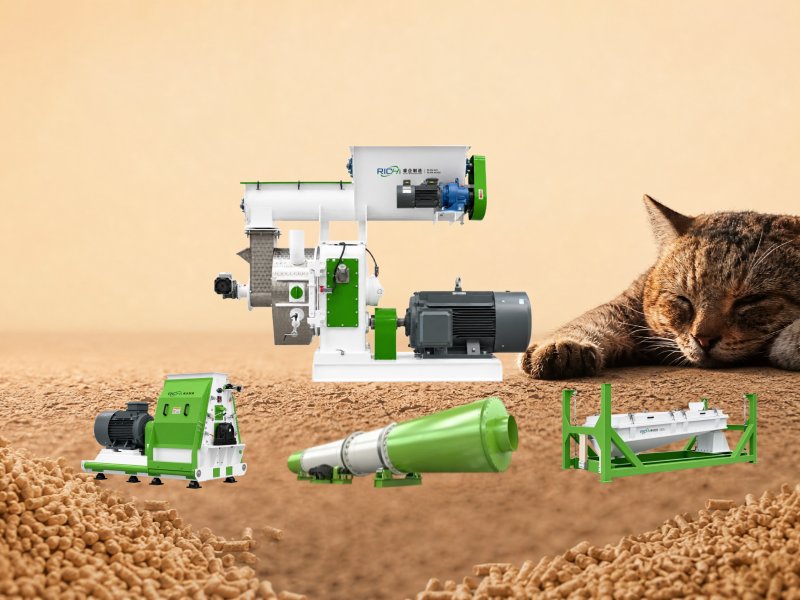
RICHI can provide integrated biomass processing solutions covering raw material preparation, crushing and grinding, drying, pelletizing, cooling, screening, conveying, dust collection, packing, and electrical control.
How to Reduce Energy Consumption During Wood Drying
Drying itself requires energy, so improving drying efficiency is important for the economics of biomass fuel production.
Several approaches can help reduce unnecessary energy consumption.
1. Avoid Over-Drying
Removing more moisture than necessary wastes thermal energy. Set the target moisture according to the downstream application.
2. Control the Feed Rate
An unstable feed rate can cause fluctuations in residence time and drying performance. Consistent feeding helps maintain stable operating conditions.
3. Improve Heat Distribution
The hot air should contact the biomass effectively. Proper drum design, internal flights, airflow, and residence time can improve heat transfer.
4. Reduce Heat Loss
Proper insulation and appropriate duct design can reduce unnecessary heat loss.
5. Maintain the Dryer
Blocked ducts, damaged flights, poor seals, inefficient fans, or dirty dust collection systems can reduce overall performance.
6. Monitor Moisture
Regular moisture testing helps operators determine whether the dryer is achieving the intended result.
Storage After Drying
Drying does not permanently prevent wood from absorbing moisture.
Once biomass has been dried, it can reabsorb water if it is exposed to humid air, rain, condensation, or wet floors.
Therefore, dried material should be transferred efficiently to the next production stage or stored under suitable conditions.
Finished wood pellets should also be protected from moisture during storage and transportation.
A good biomass fuel production system therefore considers moisture management from raw material receiving all the way to final fuel delivery.
Common Questions About Wood Drying for Biomass Fuel
What moisture content is suitable for wood pellet production?
A commonly used target is around 10–15%, but the exact requirement depends on the wood species, particle size, pellet mill, die compression, and process conditions.
Can wet wood chips be directly pelletized?
Usually, excessive moisture makes pelletizing more difficult. Drying is generally required when the raw material moisture is above the suitable range for the pelletizing process.
Is a rotary dryer suitable for sawdust?
Rotary dryers can be used for sawdust and other biomass materials when properly designed. The final equipment configuration should consider particle size, moisture, throughput, heat source, airflow, and dust collection.
What is a wood powder dryer used for?
A wood powder dryer is used to reduce moisture in fine wood-based materials or biomass powders. Its design should account for fine-particle behavior, airflow, feeding, heat transfer, and dust collection.
Does drying improve biomass fuel energy value?
Drying does not create additional energy in the biomass. Instead, it removes water that would otherwise consume part of the combustion energy during evaporation. As a result, the useful energy available per unit weight of fuel can increase as moisture decreases.
Can biomass residues be used as dryer fuel?
In some projects, suitable biomass residues can be used as a heat source. The combustion system and emissions, fire, and safety requirements need to be properly engineered.
How do I choose the right dryer capacity?
Start with the wet material throughput, initial moisture, target moisture, particle size, bulk density, and required water evaporation rate. Dryer capacity should be evaluated from the actual drying load rather than nominal capacity alone.
(More at: RICHI Manufacture )
Conclusion
Wood drying plays a critical role in modern biomass fuel production. By reducing excessive moisture and improving moisture uniformity, a properly designed drying system can support more stable grinding, pelletizing, briquetting, storage, transportation, and combustion.
The most suitable drying solution depends on the characteristics of the raw material. Sawdust, wood chips, shavings, bark, and fine wood powder require different considerations in terms of airflow, heat transfer, feeding, residence time, and dust collection. For fine biomass materials, a wood powder dryer may be incorporated into a specialized drying system, while continuous rotary drying systems can be used for larger industrial biomass projects.
Most importantly, drying should be viewed as part of the complete biomass fuel production process rather than as an isolated machine. A well-designed system connects raw material preparation, crushing, grinding, drying, pelletizing or briquetting, cooling, screening, packing, and storage into one coordinated production line.
For investors planning a biomass fuel project, the right approach is to evaluate the raw material, moisture conditions, required fuel specifications, production capacity, available heat source, energy consumption, and downstream equipment together. With proper engineering and moisture control, wood residues can be converted into more consistent and useful solid biomass fuels for a wide range of energy applications.