
Alfalfa has earned its reputation as the queen of forages. For centuries, farmers have relied on this protein-rich legume to feed their animals, and for good reason. Its deep roots draw up minerals from the subsoil, its leaves pack more protein than most other hays, and its fiber supports healthy digestion in ruminants and horses alike. But getting that nutrition from the field into the animal efficiently—that’s where the real art lies.
The journey from standing crop to finished feed involves careful timing, proper curing, and increasingly, modern processing techniques that maximize the value of every acre. For producers who understand this journey, alfalfa becomes more than just hay. It becomes a premium product that commands higher prices and builds customer loyalty.
The Unique Value of Alfalfa
What makes alfalfa so special? The numbers tell the story. A good stand of alfalfa can produce 15% to 20% crude protein, with energy levels comparable to grains. It’s rich in calcium, potassium, and other essential minerals. The fiber in alfalfa promotes rumen health in cattle and provides the bulk that horses need for proper digestive function.
But alfalfa is also delicate. The leaves contain most of the protein and vitamins, but they’re easily lost during harvesting and handling. Leaf shatter—the breakage and loss of leaves during baling and transport—can reduce the protein content of hay by 30% or more. Rain damage during the curing process can leach out soluble nutrients. And long-term storage exposes hay to mold and spoilage, especially in humid climates.
These challenges have led producers to look for ways to preserve the nutritional value of alfalfa more effectively. Processing into pellets has emerged as one of the most reliable solutions.
Why Processing Makes Sense
When alfalfa is processed into pellets, the entire plant—leaves and stems alike—is ground, mixed, and compressed. The leaves can’t shatter and blow away. The stems are broken down to a uniform particle size. The heat generated during pelleting kills mold spores and reduces the risk of spoilage. The result is a stable, consistent product that delivers the same nutrition year-round.
The benefits extend beyond preservation. Pelleted alfalfa is easier to handle and store. It flows through feeding equipment without bridging or clogging. It reduces dust, which is particularly valuable for horses with respiratory sensitivities. And it allows for precise feeding, since each pellet contains the same proportion of every component.
For livestock producers, these advantages translate to better animal performance and lower waste. For feed manufacturers, they mean a product that commands premium prices in an increasingly competitive market.
The Equipment That Makes It Possible
Transforming baled alfalfa into finished pellets requires a system of integrated equipment. The process begins with a bale breaker that separates the compressed hay into manageable pieces. From there, a hammer mill reduces the material to a uniform particle size—typically 6 to 8 millimeters for horse and cattle feed, slightly smaller for rabbit pellets.
The ground alfalfa meal then passes through a conditioning stage where steam and moisture are added. This step is critical because alfalfa’s fibrous nature makes it difficult to pellet without proper conditioning. The steam softens the lignin in the plant cell walls, allowing the particles to bind together under pressure.
The conditioned meal enters the pellet mill, where it’s forced through the die to form dense, cylindrical pellets. The die size and compression ratio must be matched to the specific application. Horse feed typically requires a larger pellet, around 6 to 8 millimeters in diameter, while rabbit feed uses smaller pellets of 3 to 4 millimeters.
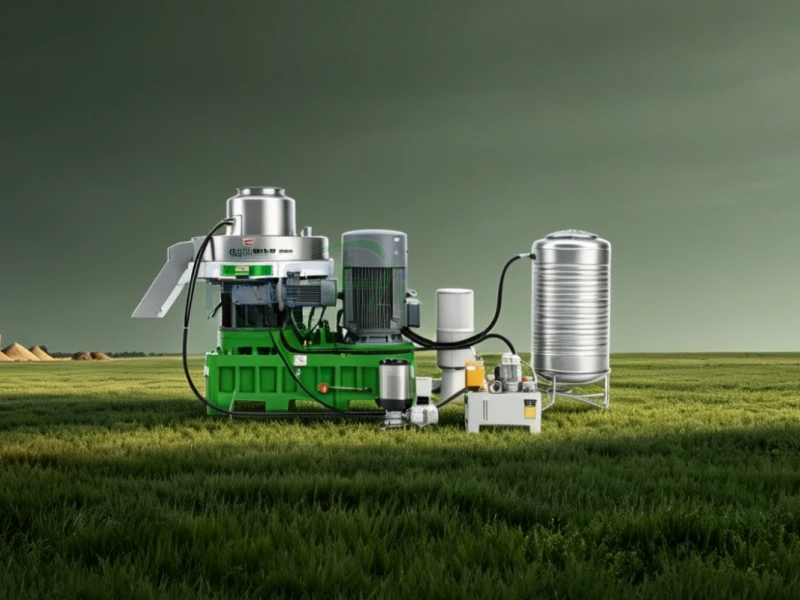
An alfalfa pellet line brings all of these components together into a coordinated system. A well-designed line balances the capacity of each piece of equipment, ensuring that the bale breaker feeds the hammer mill, which feeds the conditioner, which feeds the pellet mill, without bottlenecks or interruptions.
Formulation Considerations
While straight alfalfa pellets are common, many producers formulate blends that include other ingredients. A cattle ration might include corn or barley to boost energy, along with minerals to balance the calcium-to-phosphorus ratio. Horse feeds often include added fat sources for coat condition and additional calories. Rabbit pellets may include other forages and grains to achieve the right fiber-to-starch balance.
The pellet line must be capable of handling these variations. A cattle horse rabbit alfalfa pellet machine is designed to process multiple formulations without lengthy changeovers. The ability to switch between different recipes quickly allows feed mills to serve a broader customer base and respond to changing market demands.
The die selection also varies by species. Cattle can handle larger pellets, up to 10 millimeters, while rabbits need pellets of 3 to 4 millimeters. Horses generally prefer pellets in the 6 to 8 millimeter range, which they can chew comfortably without excessive dust.
Handling the Fiber Challenge
Alfalfa is high in fiber, and that fiber presents challenges during pelleting. The long strands of plant material can wrap around the rollers and restrict the flow of material through the die. If the material isn’t ground fine enough, the pellets will be weak and crumbly. If it’s ground too fine, the pellets may be too dense and less palatable.
The grinding stage is where this balance is achieved. A hammer mill with the right screen size produces a uniform grind that feeds smoothly through the pellet mill. For alfalfa, the optimal particle size is typically between 2 and 4 millimeters, depending on the species being fed.
Conditioning also plays a role in handling fiber. The steam and moisture soften the fibrous material, making it more pliable and easier to compress. Proper conditioning can improve pellet quality significantly, reducing fines and increasing durability.
Durability and Quality Control
Pellet durability—the ability of a pellet to withstand handling without breaking—is a key quality metric. Durability of 95% or higher is considered excellent for alfalfa pellets. Achieving this level requires the right die configuration, proper conditioning, and consistent feed rate to the pellet mill.
Quality control should include regular testing of pellet durability, moisture content, and nutrient composition. Moisture content should be around 10% to 12% for safe storage. Higher moisture levels can lead to mold growth, while lower levels may result in excessive dust.
For feed mills producing alfalfa pellets, these quality measures are essential. Customers who receive consistent, durable pellets will return for more. Those who receive crumbly, dusty feed will look elsewhere.
A Focus on Durability
The equipment used in an alfalfa pellet line must be built to last. Alfalfa is more abrasive than many other feed ingredients, and the grinding and pelleting equipment must withstand this wear. Hardened dies and wear-resistant alloys are standard in quality equipment.
Maintenance is another consideration. A line that’s easy to service will spend less time down and more time producing. Quick-change die systems, accessible bearings, and straightforward adjustment points all contribute to efficient operation.
Richi manufacture has developed specific expertise in processing fibrous forages. Their pellet lines are designed with the unique demands of alfalfa in mind—from the bale breaker that handles dense bales to the conditioner that properly softens the fiber before pelleting. The result is a system that produces consistent, high-quality pellets with minimal downtime.
Adapting to Different Species
One of the advantages of an integrated alfalfa pellet line is the ability to produce feed for multiple species. The same system that produces cattle feed can be adjusted to produce horse or rabbit pellets with changes to the die and formulation.
This flexibility is valuable for feed mills serving a diverse customer base. Instead of maintaining separate lines for each species, a single line can handle all of them with appropriate adjustments. The economics of scale improve as the line operates at higher capacity, producing more tons per hour of finished product.
For mills that specialize in alfalfa processing, this versatility is a competitive advantage. They can serve cattle operations, horse owners, and rabbit breeders from the same facility, building a broader customer base and more stable revenue.
The Nutritional Difference
Pelleted alfalfa is more than just convenient—it’s nutritionally superior in some respects. The heat generated during pelleting gelatinizes starches, making them more digestible. The mechanical grinding breaks down cell walls, increasing the accessibility of nutrients. And the uniform particle size ensures that every bite delivers the same nutritional value.
Research has shown that pelleted alfalfa can improve feed efficiency in growing cattle and support higher milk production in dairy cows. For horses, it provides a consistent source of fiber without the dust and variability of baled hay. For rabbits, it delivers the long fiber they need for proper digestion in a form that’s easy to feed and store.
Conclusion
Alfalfa is one of the most valuable forages available, and its value only increases when it’s processed into high-quality pellets. The journey from field to feed trough requires the right equipment, careful quality control, and an understanding of the nutritional needs of different species. For feed mill operators who invest in a well-designed processing line, the rewards include satisfied customers, efficient production, and a premium product that stands out in the market.