




The growing demand for renewable heating fuels has encouraged many agricultural, forestry, woodworking, and biomass businesses to reconsider the value of materials that were once treated mainly as waste.
Wood chips are a good example. They are produced during forestry operations, sawmilling, furniture manufacturing, wood processing, and tree maintenance. Depending on their size, moisture content, and composition, these materials can be converted into useful solid biofuel.
Pelletizing is one of the most practical ways to improve the handling and transportation characteristics of loose wood-based biomass.
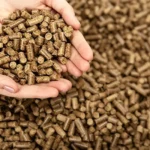
Instead of transporting a large volume of irregular chips, producers can process the material into compact cylindrical pellets with more consistent dimensions.
However, turning wood chips into pellets is not simply a matter of putting chips into a machine. The entire production process needs to be considered.
A successful project may involve material storage, chipping, screening, grinding, drying, pelletizing, cooling, screening, and packaging.
For businesses planning such a project, understanding the relationship between each stage can be more valuable than focusing on a single machine specification.
What Makes Wood Chips Suitable for Pellet Production?
Wood chips are not all the same.
Chips from softwood species can behave differently from hardwood chips. Materials from sawmills may contain less bark than forestry residues. Chips from tree pruning operations can contain leaves, dirt, and irregular pieces.
Moisture is another major factor.
Freshly produced wood chips may contain considerable moisture, especially when they come directly from recently harvested trees. Material that is too wet is generally difficult to pelletize efficiently.
Particle size also matters.
Large chips cannot always enter the pelletizing process directly. They may need to pass through a crusher or hammer mill first.
Therefore, raw material evaluation should be the first stage of project planning.
Why Particle Size Influences Pellet Quality
Pellet production relies on compression.
The raw material must be sufficiently uniform for the pellet mill to compress it consistently.
Large wood particles can create gaps in the material structure. Extremely uneven particle sizes can also make feeding less stable.
Grinding helps create a more consistent feedstock.
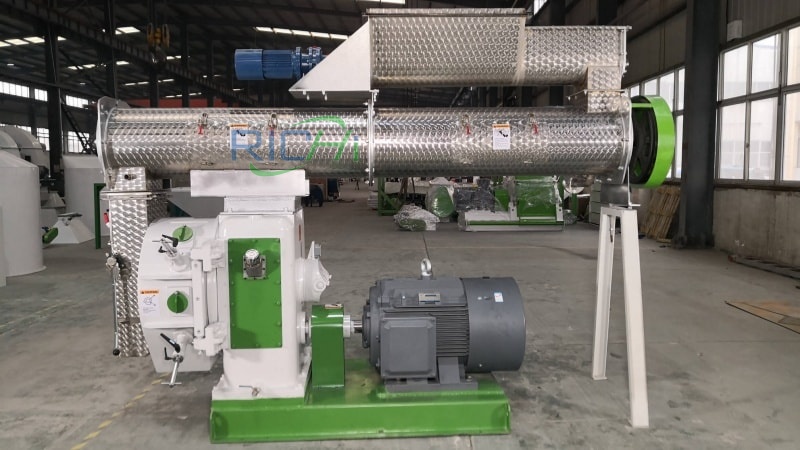
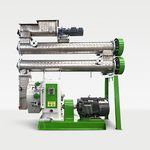
A properly selected wood chip pellet machine should therefore be considered together with the grinding system rather than independently.
The grinding equipment needs to be capable of preparing the incoming chips for the required pellet diameter.
The final particle size depends on the target pellet specifications and the characteristics of the wood.
Moisture Is One of the Most Important Variables
If there is one issue that biomass pellet producers should pay close attention to, it is moisture.
Wood that is too wet can cause several processing difficulties.
It may reduce pelletizing efficiency, increase energy requirements, create unstable pellet formation, and increase the workload of the drying system.
Material that is excessively dry can also behave differently during compression.
For this reason, moisture should be controlled rather than treated as an incidental characteristic.
A biomass project may use a drum dryer or another suitable drying system depending on capacity, fuel availability, and raw material conditions.
The dryer should be sized according to the actual moisture reduction required rather than simply according to the pellet mill’s rated capacity.
Why Drying Capacity Should Be Calculated Carefully
Consider two plants that both produce five tons of pellets per hour.
One plant receives relatively dry sawdust. The other receives freshly harvested wood chips with high moisture content.
They may require very different drying systems.
The second project needs to remove substantially more water before pelletizing.
This affects dryer size, heat demand, fuel consumption, and overall operating costs.
Therefore, pellet production capacity alone is not enough to design a biomass drying system.
A project assessment should include:
- Initial moisture
- Target moisture
- Raw material bulk density
- Hourly feedstock quantity
- Heat source
- Ambient conditions
- Final pellet requirements
This approach produces a much more realistic plant design.
What Happens Before the Pellet Mill?
A typical wood biomass pellet production process may follow this sequence:
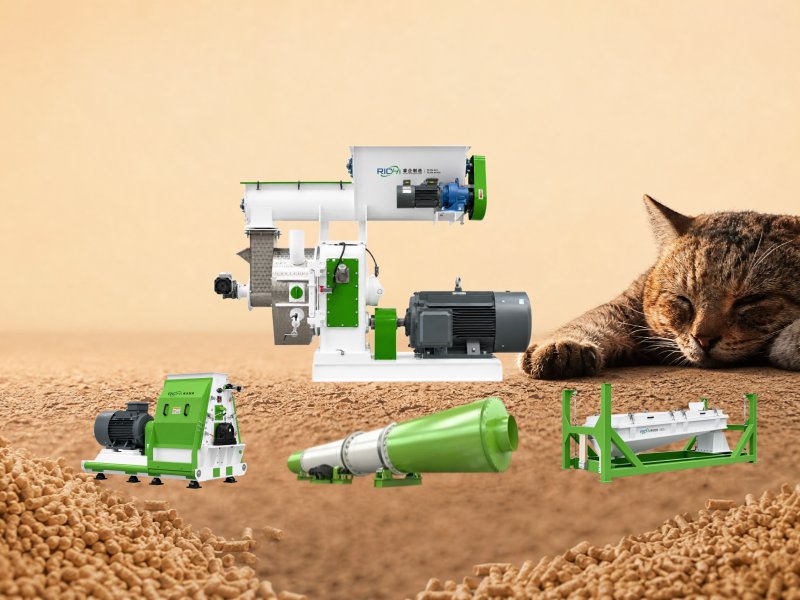
Wood chips → Screening → Crushing/Grinding → Drying → Fine Grinding → Pelletizing → Cooling → Screening → Packing
Not every project requires every stage.
For example, relatively dry and fine wood residues may need little preparation before pelletizing.
Larger forestry chips, however, can require several preparation steps.
Screening can remove oversized materials and unwanted contaminants.
Grinding then reduces particle size.
Drying brings the moisture into a suitable range.
Fine grinding may be used when the material requires additional particle-size reduction.
Finally, the pellet mill compresses the prepared biomass.
Is a Wood Chipper Enough?
A wood chipper and a pellet mill perform different functions.
A chipper reduces logs, branches, or other large wood materials into chips.
A pellet mill then compresses prepared biomass into pellets.
For a commercial project, the chipper should therefore not be considered a replacement for grinding equipment.
The correct preparation system depends on the incoming material.
If the raw material already consists of small chips, a hammer mill or crusher may be more appropriate.
(Related Post: https://biomasspelletizer.com/wood-chip-hammer-mill/)
If the material includes large branches or logs, a chipper may be necessary before further processing.
What Pellet Size Should Be Produced?
Biomass pellets are commonly produced in several diameters.
The appropriate size depends on the intended market and combustion equipment.
Residential heating applications may have different requirements from industrial boilers.
Before selecting the pellet die, producers should identify the target market.
Pellet diameter affects the final product specification and may influence the pelletizing configuration.
It is therefore better to decide the intended pellet size before purchasing the main equipment.
How Does the Pellet Mill Create Compact Fuel?
Inside the pelletizing system, prepared biomass is compressed through holes in a die.
Pressure and friction generate the conditions required to form compact pellets.
The process can improve bulk density and make the biomass easier to transport.
After leaving the die, pellets are still relatively hot and may contain moisture that needs to be stabilized.
This is why cooling is an important downstream stage.
Why Cooling Should Not Be Ignored
Fresh pellets are not immediately ready for long-term storage.
They need to cool and stabilize.
A suitable cooling system can reduce pellet temperature and help establish appropriate moisture conditions.
Without adequate cooling, producers may encounter problems during packaging or storage.
For a larger industrial wood pellet production line solution, the cooling system should be matched to the expected production rate.
A pellet mill producing several tons per hour should not be paired with an undersized cooler.
What About Pellet Fines?
Some fines are normally generated during biomass pellet production.
However, excessive fines can indicate problems with raw material preparation, pelletizing conditions, cooling, or handling.
A screening system can separate fines from finished pellets.
Depending on the plant configuration, fines may be returned to the production process.
This can improve material utilization and reduce waste.
Can Wood Pellets Be Made From Different Wood Sources?
Yes.
A pellet plant can potentially process different wood residues, provided the material characteristics are compatible with the equipment.
Possible feedstocks include:
- Sawdust
- Wood chips
- Forestry residues
- Wood shavings
- Sawmill residues
- Certain clean wood processing wastes
However, mixing different materials can change moisture, density, and pelletizing behavior.
Producers should therefore test the actual feedstock rather than assuming that all wood residues will perform identically.
Why Storage Matters Before and After Pelletizing
Raw material storage and finished pellet storage require different considerations.
Loose wood chips can absorb moisture from the environment.
If wet material is stored for too long, its condition may change before processing.
Finished pellets also need protection from moisture.
Pellets are compact but remain sensitive to water exposure.
Good storage practices can therefore protect both raw material quality and finished-product value.
How Should Producers Calculate Capacity?
Capacity should be connected to the available raw material supply.
Suppose a factory has access to only a limited quantity of wood residues each day.
Installing a very high-capacity pelletizing system may not make economic sense if the raw material supply cannot support continuous production.
Conversely, if a sawmill produces large quantities of sawdust every day, a higher-capacity system may help turn a disposal problem into an additional revenue stream.
Capacity planning should therefore consider:
Raw material availability + operating hours + moisture loss + target pellet output + market demand.
What Equipment Should Buyers Compare?
When evaluating biomass equipment suppliers, buyers should compare the complete process rather than one machine.
Important questions include:
- What raw materials can be processed?
- What moisture range is suitable?
- What grinding equipment is required?
- What drying capacity is recommended?
- What pellet sizes can be produced?
- How much power is required?
- What cooling system is needed?
- How are fines handled?
- What maintenance is required?
Companies researching biomass machinery can also examine Richi Machinery as part of their supplier comparison.
Where Can New Producers Continue Their Research?
Biomass pellet production combines forestry, mechanical processing, thermal drying, and energy management.
New investors should therefore research each stage separately before finalizing a project.
Information about biomass fuel properties, pellet standards, equipment configurations, and raw material preparation can be found through technical publications and helpful resources from manufacturers and industry organizations.
The more accurately a producer understands the feedstock, the easier it becomes to design the right process.
Conclusion
Wood chips can represent much more than a low-value forestry or woodworking residue.
With appropriate preparation, they can become a compact renewable fuel that is easier to transport, store, and utilize.
The key to successful production is not simply purchasing a powerful pellet mill.
Instead, producers should build a balanced process around raw material size, moisture, capacity, pellet specifications, drying requirements, cooling, storage, and market demand.
When each stage is properly matched, wood pellet production can provide a practical route for converting biomass residues into a useful renewable energy product.