





Dust control is one of the most important environmental, safety, and product-quality issues in a modern cat litter factory. During the manufacturing process, raw materials may be crushed, ground, dried, mixed, pelletized, screened, conveyed, and packaged. Almost every stage can generate fine particles if the process and equipment are not properly designed.
Excessive dust can affect the working environment, increase material losses, contaminate finished products, reduce equipment efficiency, and create additional cleaning and maintenance requirements. For manufacturers producing bentonite cat litter, tofu cat litter, wood cat litter, biomass cat litter, or other plant-based products, an effective dust-control strategy should therefore be incorporated into the production system from the beginning.
Modern cat litter machinery can be equipped with dust collection, enclosed conveying, optimized screening, and automated control systems to reduce dust generation and capture airborne particles. However, dust control should not rely on one machine alone. The best results come from combining appropriate raw materials, process optimization, equipment design, ventilation, filtration, housekeeping, and preventive maintenance.
This article explains where dust comes from during cat litter manufacturing, how to control it, what equipment can be used, and how to design a cleaner and more efficient cat litter production plant.
1. Why Is Dust Control Important in Cat Litter Production?
Dust is more than a housekeeping problem.
A factory with excessive airborne dust may experience:
- Poor working conditions
- Increased cleaning requirements
- Material losses
- Product contamination
- Reduced visibility around equipment
- Faster wear of some components
- Lower packaging quality
- Increased maintenance requirements
From a product perspective, excessive fines can reduce the perceived quality of cat litter.
Consumers generally prefer products that produce less dust during pouring and scooping. Therefore, controlling dust during manufacturing can contribute directly to finished-product quality.
2. What Causes Dust in a Cat Litter Factory?
Dust can be generated at many points in the production process.
Typical dust-generating operations include:
- Raw material unloading
- Crushing
- Grinding
- Mixing
- Drying
- Pelletizing
- Cooling
- Screening
- Conveying
- Packaging
The amount of dust depends on:
- Raw material characteristics
- Particle size
- Moisture
- Equipment design
- Material impact
- Conveying speed
- Pellet durability
- Screening efficiency
Understanding the source of dust is the first step toward controlling it.
3. Raw Material Characteristics Affect Dust
Different cat litter materials have different dust-generation tendencies.
Bentonite
Mineral-based materials can generate fine particles during crushing, grinding, and screening.
Sawdust and Wood Fiber
Dry biomass can produce fine wood particles during grinding and conveying.
Soybean Residue
Dry soybean fiber may generate fines during grinding and pelletizing.
Corn Fiber
Corn-based materials can produce powder during size reduction and handling.
Rice Husk
Rice husk can produce fine particles during crushing and grinding.
Therefore, dust-control systems should be designed according to the specific raw materials rather than using exactly the same configuration for every factory.
4. Moisture Control Is the First Dust-Control Measure
Moisture has a major influence on dust generation.
Extremely dry materials are generally more likely to become airborne during:
- Grinding
- Conveying
- Screening
- Packaging
However, adding excessive moisture is not a practical solution.
Too much moisture can cause:
- Poor pellet formation
- Higher drying costs
- Product instability
- Material sticking
- Storage problems
The objective is to maintain an appropriate moisture level throughout the process.
5. Control Dust at the Source
The most effective dust-control strategy is to capture dust as close as possible to where it is generated.
Instead of allowing dust to spread throughout the factory and attempting to clean it afterward, manufacturers should install extraction points directly at major dust sources.
Typical extraction locations include:
- Crusher discharge
- Hammer mill outlet
- Mixer
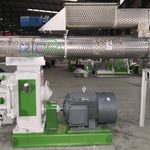
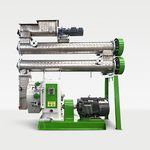
- Pellet mill
- Dryer
- Cooler
- Screening machine
- Packaging machine
Source capture makes the entire dust-control system more efficient.
6. Enclose Dust-Generating Equipment
Enclosing machinery can significantly reduce the spread of airborne particles.
For example, crushers and hammer mills can be installed with appropriate sealed covers and connected to ductwork.
Enclosed conveyors can also reduce dust during material transportation.
The principle is simple:
Generate dust → Contain dust → Extract dust → Filter dust
This approach is more effective than relying only on general factory ventilation.
7. Use Cyclone Dust Collectors
Cyclones are commonly used in biomass-processing systems.
A cyclone uses centrifugal force to separate relatively large particles from an air stream.
They can be installed downstream of:
- Hammer mills
- Dryers
- Pneumatic conveying systems
Cyclones are particularly useful as a first-stage separation device.
However, fine particles may remain in the exhaust air, so a cyclone may be combined with a bag filter for higher-efficiency dust collection.
8. Use Baghouse Filters
Baghouse dust collectors are widely used when fine particles need to be removed from industrial exhaust air.
The basic process is:
Dusty Air → Filter Bags → Cleaned Air
Dust particles are captured on the surface of the filter bags.
The accumulated dust can then be removed through a cleaning mechanism and collected.
A properly selected baghouse system can provide effective fine-particle control for cat litter production facilities.
9. Use Industrial Exhaust Fans
A dust collector cannot work effectively without appropriate airflow.
Exhaust fans create negative pressure and move dusty air from production equipment toward the filtration system.
The fan must be properly matched to:
- Duct diameter
- Duct length
- Number of extraction points
- Pressure losses
- Filter resistance
An incorrectly sized fan can result in insufficient suction or excessive energy consumption.
10. Design Ductwork Correctly
Ductwork is an important but sometimes overlooked part of dust control.
Poorly designed ducts can cause:
- Insufficient suction
- Dust accumulation
- Excessive pressure loss
- Higher fan power consumption
- Uneven airflow
The duct system should be designed according to the actual equipment arrangement.
Sharp bends should be minimized where practical.
Inspection and cleaning access should also be provided.
11. Dust Control During Crushing
Crushing can generate significant dust, particularly when processing dry agricultural or biomass materials.
Dust-control measures include:
- Enclosing the crusher
- Installing local extraction
- Using suitable feeding systems
- Connecting the crusher to a cyclone or filter
- Minimizing unnecessary material impact
The feed system should also be stable.
Sudden overfeeding can cause equipment overload and increase dust generation.
12. Dust Control During Grinding
Grinding is often one of the most significant dust-generating stages.
A hammer mill can produce large quantities of fine material.
An effective grinding section may include:
Feeder → Hammer Mill → Cyclone → Dust Collector → Exhaust Fan
The grinding system should be properly sealed.
The air volume should be sufficient to transport particles and prevent dust from escaping into the workshop.
13. Optimize Grinding Particle Size
Grinding too finely can increase dust.
It can also:
- Increase energy consumption
- Reduce hammer mill capacity
- Increase equipment wear
- Create more fines
Therefore, manufacturers should determine the appropriate particle size for pelletizing or granulation.
The goal is to achieve good forming performance without unnecessarily producing powder.
14. Dust Control During Mixing
Mixers can generate dust when dry powders are loaded and blended.
This is especially important when formulations contain:
- Starch
- Fine fiber
- Mineral additives
- Activated carbon
- Other powdered ingredients
The mixer can be enclosed and connected to a local extraction system.
Controlled feeding also helps prevent sudden dust clouds.
15. Dust Control During Pelletizing
Pelletizing generally produces less loose powder than grinding, but dust can still be generated.
Potential sources include:
- Fine raw material
- Pellet mill feeding
- Pellet discharge
- Broken pellets
- Mechanical impact
A properly conditioned raw material can improve pellet formation and reduce fines.
The pellet mill should also be operated within its appropriate capacity range.
16. Improve Pellet Durability
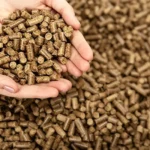
One of the best ways to reduce dust in finished cat litter is to improve pellet durability.
Fragile pellets break during:
- Cooling
- Screening
- Conveying
- Packaging
- Transportation
This creates fines that eventually become dust.
Pellet durability can be improved through:
- Appropriate raw materials
- Correct moisture
- Proper grinding
- Suitable formulation
- Optimized pelletizing pressure
- Proper die selection
17. Dust Control During Drying
Drying systems can produce dust because dry particles are carried by moving hot air.
The dryer should therefore be connected to an appropriate dust-separation system.
A typical system may include:
Dryer → Cyclone → Bag Filter → Exhaust Fan
The exact configuration depends on the material and dryer design.
Dryer airflow should be optimized to transport moisture efficiently without unnecessarily carrying large amounts of product fines into the exhaust system.
18. Prevent Over-Drying
Over-drying can increase dust.
When biomass becomes excessively dry, it may become more brittle.
This can increase particle breakage during subsequent conveying and screening.
The dryer should therefore be controlled according to the required finished-product moisture rather than simply operating at maximum drying intensity.
19. Dust Control During Cooling
Cooling can also move fine particles.
A cooler should be connected to an appropriate exhaust and filtration system where necessary.
The airflow should be sufficient to cool the pellets without excessively carrying fines out of the system.
Proper screening before final packaging can also reduce the amount of fines that reach the finished product.
20. Screening Is Critical for Dust Reduction
Screening removes broken pellets and fines.
An efficient screening machine can separate:
- Qualified particles
- Fine powder
- Oversized particles
- Broken pellets
If screening is insufficient, fine particles may remain in the finished product.
This can result in:
- More dust during transportation
- More dust when customers pour the litter
- Poor product appearance
- Increased product complaints
Therefore, screening is both a quality-control and dust-control stage.
21. Recycle Suitable Fines
Some fines can potentially be recycled.
For example, suitable plant-based fines may be returned to the mixing or pelletizing process.
This can:
- Reduce material waste
- Improve yield
- Reduce disposal costs
However, recycling should be carefully controlled.
Too much recycled fine material can negatively affect:
- Pellet strength
- Dust
- Absorption
- Product consistency
The recycling ratio should therefore be determined through production testing.
22. Dust Control During Conveying
Material transfer can generate dust through mechanical impact.
For example, pellets can break when they fall from excessive heights.
Dust generation can be reduced by:
- Shortening drop distances
- Using appropriate conveyors
- Reducing excessive conveyor speed
- Using enclosed conveyors
- Installing soft-transfer points
- Avoiding unnecessary transfers
Good factory layout design can reduce the total amount of material movement.
23. Use Enclosed Conveyors
Enclosed conveyors can reduce the release of airborne particles.
Common conveying equipment includes:
- Screw conveyors
- Bucket elevators
- Belt conveyors
- Pneumatic conveying systems
The correct choice depends on:
- Material characteristics
- Capacity
- Distance
- Elevation
- Product durability
For dusty powders, enclosed systems can be particularly useful.
24. Dust Control During Packaging
Packaging is the final major dust-generating stage.
Fine particles may escape when bags are filled.
A packaging dust-control system can include:
- Local extraction
- Enclosed filling area
- Bag clamping system
- Dust collection duct
- Filter system
Automatic packaging machines can also improve filling consistency and reduce material spillage.
25. Improve Bag Filling Accuracy
Overfilling bags can create unnecessary product losses.
Underfilling can cause commercial problems.
An automatic weighing and filling machine provides more consistent package weights.
Accurate packaging also helps reduce spillage around the packaging station.
Less spillage means less dust and less housekeeping.
26. Maintain Negative Pressure
In dusty processing areas, controlled negative pressure can help prevent dust from escaping into adjacent clean areas.
The ventilation system should be designed so that air flows:
Cleaner Area → Dustier Area → Dust Collection System
This approach helps keep dusty operations contained.
However, ventilation should be professionally designed to ensure adequate airflow and worker comfort.
27. Separate Clean and Dusty Areas
A modern cat litter factory can be divided into functional zones.
Dusty Areas
- Crushing
- Grinding
- Mixing
- Screening
Cleaner Areas
- Finished product inspection
- Packaging
- Finished product warehouse
Separating these areas helps prevent dust from spreading across the entire factory.
28. Housekeeping Is Still Important
Even with a sophisticated dust collection system, regular housekeeping remains necessary.
Accumulated dust should not be allowed to build up on:
- Floors
- Equipment
- Platforms
- Pipes
- Beams
- Electrical cabinets
Industrial vacuum systems are generally preferable to simply sweeping dry dust into the air.
Housekeeping schedules should be established according to production conditions.
29. Prevent Dust Accumulation on Equipment
Dust can accumulate on motors, electrical cabinets, sensors, and mechanical components.
This can increase maintenance requirements.
Operators should regularly inspect equipment and remove accumulated material according to appropriate maintenance procedures.
Electrical components should receive particular attention because dust accumulation can affect cooling and equipment reliability.
30. Monitor Dust Collection System Performance
A dust collection system should not simply be installed and forgotten.
Operators should monitor:
- Airflow
- Fan operation
- Filter condition
- Pressure differential
- Dust discharge
- Duct blockage
If suction decreases, operators should investigate the cause.
Possible causes include:
- Blocked ducts
- Full dust bins
- Damaged filter bags
- Fan problems
- Leaks
- Incorrect dampers
31. Maintain Filter Bags
Bag filters require regular inspection.
Problems can occur if:
- Bags become clogged
- Bags are damaged
- Cleaning systems fail
- Dust accumulates excessively
A maintenance schedule should specify when filter bags are inspected and replaced.
Keeping spare filter bags available can reduce downtime.
32. Control Dust Without Increasing Energy Costs Excessively
Dust collection requires fans and filtration equipment, which consume energy.
An inefficient system can increase electricity costs.
To improve efficiency:
- Optimize duct design
- Avoid unnecessary extraction points
- Use variable-speed fans where appropriate
- Maintain filters
- Reduce air leakage
- Balance airflow
The goal is to capture dust effectively while using the minimum practical airflow.
33. Automation for Dust Control
Modern cat litter factories can integrate dust-control equipment into centralized automation.
A PLC system can monitor:
- Fan status
- Filter pressure
- Motor operation
- Temperature
- Equipment alarms
Automatic control can activate dust collection when relevant machines start.
This prevents operators from forgetting to start the extraction system.
34. How Cat Litter Machinery Supports Dust Control
Modern cat litter machinery should be viewed as part of an integrated process rather than isolated equipment.
For example:
Crusher + Local Extraction
reduces dust during size reduction.
Hammer Mill + Cyclone + Bag Filter
captures grinding dust.
Dryer + Cyclone + Filter
controls particles carried by hot air.
Screen + Dust Collector
reduces fines and airborne particles.
Automatic Packaging + Local Extraction
controls dust at the final stage.
This integrated approach is much more effective than installing one large dust collector without considering individual dust sources.
https://pelletisingmachine.com/cat-litter-machine
35. Choosing the Right Cat Litter Machinery
When purchasing cat litter machinery, manufacturers should consider more than production capacity.
Important questions include:
- What raw material will be processed?
- What is the raw material moisture?
- What particle size is required?
- How much dust is generated?
- What is the target capacity?
- What product specifications are required?
- How automated should the factory be?
The equipment supplier should consider dust control during the overall process design.
36. Dust Control for Different Cat Litter Types
Bentonite Cat Litter
The main dust sources may be crushing, grinding, granulation, and screening.
Strong source extraction and filtration are important.
Tofu Cat Litter
Dust may come from soybean residue grinding, additives, pelletizing, and screening.
Moisture and pellet durability are especially important.
Wood Cat Litter
Dry wood particles can generate significant dust during grinding.
Enclosed grinding and efficient filtration are recommended.
Biomass Cat Litter
Agricultural residues may generate dust during crushing, drying, and pelletizing.
Raw material moisture and drying conditions should be carefully controlled.
37. Dust Control for Small Cat Litter Factories
A small factory may not need an extremely complex dust-control system.
A basic system can include:
- Enclosed crusher
- Hammer mill
- Cyclone
- Bag filter
- Local extraction
- Enclosed conveyors
However, even small factories should identify all major dust sources.
A compact dust-control system can be designed around actual production capacity.
38. Dust Control for Large Cat Litter Factories
A large commercial factory may require a centralized dust-control system.
The system can include:
- Multiple extraction points
- Central ductwork
- Cyclones
- Baghouse filters
- Multiple fans
- Automatic control
- Dust discharge systems
The system should be designed according to the entire factory layout.
Centralized systems can simplify maintenance and monitoring.
39. How to Design an Efficient Dust-Control System
A practical design process includes:
Step 1: Identify Dust Sources
Map all major dust-generating operations.
Step 2: Estimate Airflow Requirements
Determine the required extraction volume.
Step 3: Design Ductwork
Minimize unnecessary pressure losses.
Step 4: Select Filtration
Choose appropriate cyclone and/or bag-filter technology.
Step 5: Select Fans
Match fan performance to system resistance.
Step 6: Integrate With Production Equipment
Connect extraction points directly to dust-generating machinery.
Step 7: Automate Control
Coordinate fans and filters with production equipment.
Step 8: Establish Maintenance Procedures
Monitor filters, fans, ducts, and dust bins.
40. Common Dust-Control Mistakes
Several mistakes can reduce dust-control effectiveness.
Relying Only on General Ventilation
General ventilation cannot replace source capture.
Using an Undersized Fan
Insufficient airflow allows dust to escape.
Poor Duct Design
Excessive pressure losses reduce suction.
Ignoring Equipment Sealing
Dust escapes before it reaches the extraction system.
Neglecting Filter Maintenance
Clogged filters reduce airflow.
Excessive Grinding
Produces unnecessary fines.
Poor Screening
Allows excessive powder into finished products.
Avoiding these mistakes can significantly improve factory cleanliness.
41. Safety Considerations
Dust-control systems should be designed with appropriate industrial safety practices.
Depending on the raw materials and process, manufacturers should consider:
- Equipment grounding
- Electrical safety
- Appropriate ventilation
- Fire prevention
- Dust accumulation control
- Emergency shutdown systems
- Proper maintenance
Some combustible biomass dusts can present fire or explosion hazards under certain conditions. Therefore, the dust-control and electrical systems should be designed according to applicable local regulations and professional engineering requirements.
42. How to Build a Cleaner Cat Litter Factory
A cleaner production plant combines several strategies:
Good Raw Materials
↓
Controlled Moisture
↓
Optimized Grinding
↓
Enclosed Equipment
↓
Local Dust Extraction
↓
Cyclone/Bag Filter
↓
Efficient Screening
↓
Low-Dust Conveying
↓
Controlled Packaging
↓
Regular Housekeeping
This system-level approach can significantly reduce airborne dust.
43. RICHI Cat Litter Machinery and Dust-Control Solutions
RICHI Machinery can configure cat litter machinery and supporting systems according to the customer’s raw materials, production capacity, product specifications, and factory layout.
Depending on the project, the production system can include:
- Raw material receiving equipment
- Crushers
- Hammer mills
- Dryers
- Mixers
- Pellet mills
- Coolers
- Screening machines
- Conveyors
- Packaging machines
- Cyclones
- Bag filters
- Exhaust fans
- PLC control systems
Dust collection can be incorporated into the production-line design rather than added as an afterthought.
For customers producing tofu, wood, biomass, or other plant-based cat litter, RICHI can develop customized production solutions based on raw material characteristics and required output.
The integrated approach can help coordinate material handling, processing equipment, environmental systems, and packaging equipment into one production process.
44. How to Maintain Long-Term Dust-Control Performance
Installing a dust-control system is only the beginning.
Long-term performance requires:
- Regular filter inspection
- Duct cleaning
- Fan maintenance
- Equipment sealing checks
- Dust-bin emptying
- Airflow monitoring
- Housekeeping
- Operator training
A preventive maintenance schedule should be established from the beginning of factory operation.
45. Benefits of Effective Dust Control
A properly designed dust-control system can provide several benefits.
Better Working Environment
Less airborne dust creates a cleaner production area.
Improved Product Quality
Fewer fines can improve finished-product appearance and handling.
Lower Material Loss
Captured dust can sometimes be recycled where appropriate.
Reduced Cleaning
Less dust accumulation means less housekeeping.
Better Equipment Reliability
Cleaner machinery can reduce some maintenance problems.
Improved Production Efficiency
Stable equipment operation helps maintain consistent output.
46. Dust Control and Product Quality Are Closely Connected
Dust control should not be considered only an environmental issue.
It is also a product-quality issue.
For example, if a pellet mill produces weak pellets, the finished product may contain excessive fines.
This means that dust reduction should begin with the pellet itself.
A better approach is:
Strong Pellet Formation → Efficient Cooling → Gentle Conveying → Effective Screening → Controlled Packaging
The objective is to prevent fines from being created in the first place.
47. A Practical Dust-Control Checklist
Before operating a cat litter production plant, manufacturers can check:
- Are raw materials properly controlled?
- Is moisture stable?
- Are crushers enclosed?
- Is the hammer mill connected to dust extraction?
- Is the cyclone correctly sized?
- Is the bag filter functioning?
- Is ductwork properly sealed?
- Are fans providing sufficient airflow?
- Is screening removing excessive fines?
- Are conveyors minimizing pellet breakage?
- Is packaging equipped with local extraction?
- Are filters regularly maintained?
- Are dusty areas separated from clean areas?
- Are operators trained?
Regular inspections help maintain long-term performance.
Conclusion
Dust control is an essential part of modern cat litter manufacturing. Crushing, grinding, drying, pelletizing, screening, conveying, and packaging can all generate fine particles, especially when processing dry biomass, soybean residue, wood fiber, bentonite, and other raw materials.
The most effective solution is not simply to install a dust collector. Manufacturers should control dust throughout the entire production process by:
- Selecting suitable raw materials
- Controlling moisture
- Optimizing grinding
- Improving pellet durability
- Enclosing dust-generating equipment
- Installing local extraction
- Using cyclones and bag filters
- Designing efficient ductwork
- Optimizing conveying
- Improving screening
- Controlling packaging dust
- Maintaining negative pressure where appropriate
- Establishing regular housekeeping
- Performing preventive maintenance
Modern cat litter machinery can integrate these measures into a complete production system. When crushing, grinding, drying, pelletizing, cooling, screening, conveying, and packaging equipment are properly matched with dust-control systems, manufacturers can create a cleaner, more efficient, and more reliable factory.
For commercial projects, RICHI can customize the production process and equipment configuration according to raw materials, capacity, product type, factory layout, and automation requirements. A properly engineered system can combine production equipment with dust collection, environmental protection, automation, and packaging into one coordinated solution.
Ultimately, effective dust control begins with good process design. The best strategy is to prevent unnecessary fines, capture dust at its source, filter airborne particles efficiently, and maintain the entire system continuously. By taking this approach, cat litter manufacturers can improve workplace conditions, protect product quality, reduce material losses, and achieve more stable long-term production.
