




Agriculture is one of the world’s most important industries, providing food, feed, and raw materials for billions of people. However, agricultural activities also generate enormous quantities of waste every year. Crop residues such as straw, stalks, husks, shells, and other by-products often accumulate after harvest, creating significant disposal challenges for farmers and rural communities. In many regions, agricultural waste is burned in fields, left to decompose, or discarded, leading to environmental pollution and the loss of potentially valuable resources.
As the global demand for renewable energy and sustainable waste management solutions continues to grow, biomass pelletizing has emerged as an effective method for converting agricultural waste into useful energy products. By transforming crop residues into high-density fuel pellets, biomass pelletizing reduces waste, creates additional income opportunities, and contributes to environmental protection.
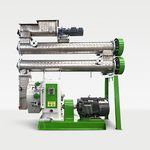
Modern pelletizing technologies, including the vertical ring die pellet mill, have made it possible to efficiently process a wide range of agricultural materials into high-quality biomass pellets. This article explores how biomass pelletizing helps reduce agricultural waste and supports sustainable development.
Understanding Agricultural Waste
Agricultural waste refers to organic materials generated during farming, harvesting, and agricultural processing activities.
Common types of agricultural waste include:
- Wheat straw
- Rice straw
- Corn stalks
- Corn cobs
- Rice husks
- Peanut shells
- Cotton stalks
- Sugarcane bagasse
- Sunflower husks
- Palm residues
Every year, billions of tons of these materials are produced worldwide. While some agricultural residues are used for animal feed, composting, or soil improvement, large quantities often remain underutilized.
Without proper management, agricultural waste can become an environmental and economic burden.
The Environmental Challenges of Agricultural Waste
The disposal of agricultural waste presents several environmental challenges.
Open Field Burning
One of the most common disposal methods is open burning.
Farmers often burn crop residues to clear fields quickly before the next planting season.
This practice releases:
- Carbon dioxide
- Methane
- Particulate matter
- Nitrogen oxides
- Volatile organic compounds
These emissions contribute to air pollution and climate change.
Landfill Accumulation
Some agricultural waste is transported to landfills, where it occupies valuable space and decomposes slowly.
Decomposition generates methane, a greenhouse gas that is significantly more potent than carbon dioxide.
Water Pollution
Improper disposal of agricultural residues can contaminate waterways through runoff and nutrient leaching.
Resource Waste
Perhaps the greatest problem is that agricultural residues contain valuable energy that is often wasted through inefficient disposal methods.
Biomass pelletizing provides a practical solution to these challenges.
What Is Biomass Pelletizing?
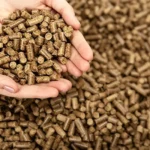
Biomass pelletizing is the process of compressing organic materials into dense cylindrical pellets.
The process typically includes:
- Raw material collection
- Drying
- Grinding
- Pelletizing
- Cooling
- Screening
- Packaging
During pellet formation, natural lignin within biomass materials acts as a binder, helping create durable pellets without requiring chemical additives.
The resulting pellets possess:
- High energy density
- Uniform size
- Improved handling characteristics
- Better storage stability
These properties make biomass pellets a valuable renewable fuel source.
Converting Waste into Valuable Energy
One of the most significant benefits of biomass pelletizing is its ability to convert agricultural waste into useful energy.
Instead of burning crop residues in fields, farmers and biomass producers can transform them into fuel pellets for:
- Residential heating
- Industrial boilers
- Power generation
- Combined heat and power systems
This conversion creates economic value from materials that would otherwise be discarded.
By turning waste into fuel, pelletizing supports both environmental sustainability and rural economic development.
Reducing Open Field Burning
Open burning remains a major source of agricultural air pollution in many countries.
Burning crop residues releases smoke and harmful pollutants that affect:
- Human health
- Air quality
- Visibility
- Climate conditions
Biomass pelletizing offers an alternative disposal pathway.
When farmers can sell crop residues to pellet producers, they have less incentive to burn agricultural waste.
This helps reduce:
- Air pollution
- Greenhouse gas emissions
- Public health risks
As pellet markets expand, more agricultural waste can be diverted away from open burning practices.
Utilizing Abundant Agricultural Residues
Many agricultural residues are produced in enormous quantities every year.
Wheat Straw
Wheat production generates substantial volumes of straw after grain harvesting.
Rather than treating straw as waste, pelletizing converts it into renewable fuel.
Rice Straw
Rice-producing regions often struggle with rice straw disposal.
Pelletizing offers an environmentally friendly solution while generating valuable energy products.
Corn Stalks
Corn farming leaves behind large amounts of stalks and leaves that can be effectively pelletized.
Sugarcane Bagasse
Sugar mills produce bagasse as a by-product of juice extraction.
Pelletizing allows this material to serve as a renewable energy source.
The ability to utilize diverse agricultural residues makes biomass pelletizing highly effective for waste reduction.
Improving Agricultural Resource Efficiency
Modern sustainability principles emphasize maximizing resource utilization.
Agricultural residues contain valuable energy that should not be wasted.
Biomass pelletizing improves resource efficiency by:
- Recovering usable energy
- Reducing waste generation
- Creating additional value streams
- Supporting circular economy practices
Instead of viewing crop residues as disposal problems, pelletizing transforms them into valuable resources.
Supporting Renewable Energy Production
Agricultural waste represents a significant renewable energy resource.
Biomass pellets produced from agricultural residues can replace fossil fuels in various applications.
Benefits include:
- Reduced coal consumption
- Lower greenhouse gas emissions
- Improved energy security
- Increased renewable energy production
As renewable energy targets become more ambitious worldwide, agricultural biomass is playing an increasingly important role in achieving sustainability goals.
The Role of the Vertical Ring Die Pellet Mill
Efficient processing of agricultural residues requires advanced pelletizing equipment.
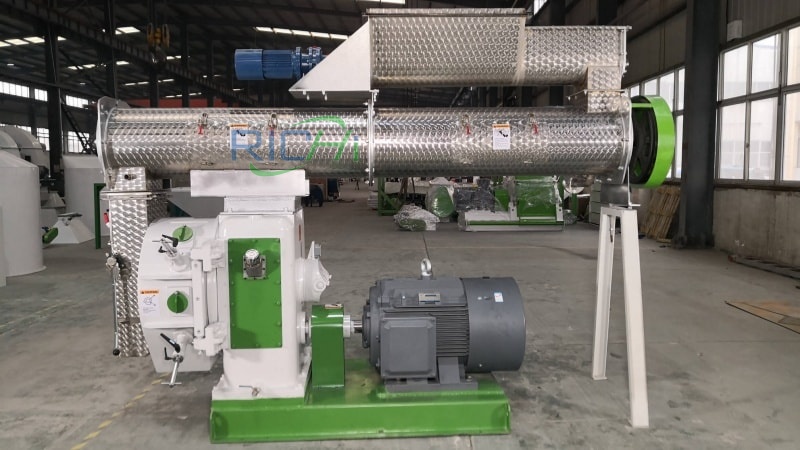
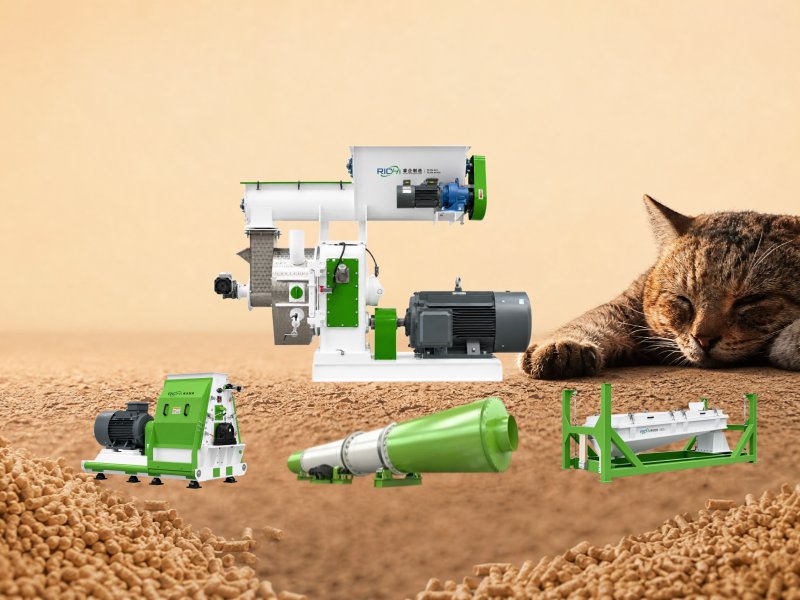
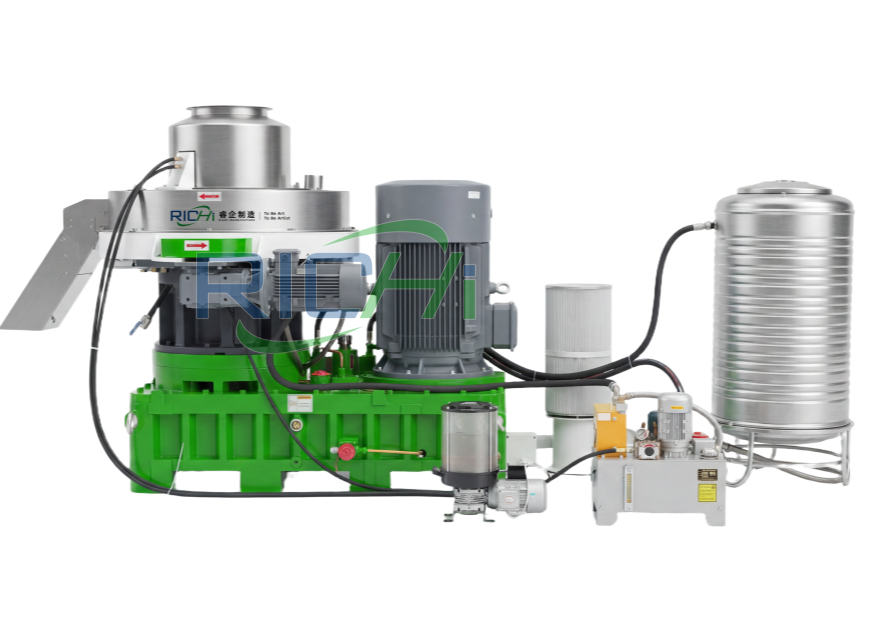
The vertical ring die pellet mill has become one of the most widely used technologies for biomass pellet production.
https://pelletisingmachine.com/vertical-ring-die-pellet-machine
Its design offers several advantages when processing agricultural materials.
Improved Material Flow
The vertical configuration allows gravity to assist material movement through the pelletizing chamber.
This promotes stable operation and reduces feeding problems.
High Compression Efficiency
Agricultural residues often contain fibrous structures that can be challenging to pelletize.
The vertical ring die pellet mill provides strong compression forces that help produce dense and durable pellets.
Greater Feedstock Flexibility
The machine can process various agricultural materials, including:
- Straw
- Corn stalks
- Rice husks
- Cotton stalks
- Bagasse
Reduced Wear
Efficient force distribution helps minimize wear on critical components.
These advantages make the vertical ring die pellet mill particularly suitable for agricultural waste utilization projects.
Creating Additional Income for Farmers
Agricultural waste often has little or no market value before processing.
Biomass pelletizing creates new revenue opportunities by establishing demand for crop residues.
Farmers can earn income by selling:
- Straw
- Stalks
- Husks
- Shells
- Processing residues
Additional revenue improves farm profitability and encourages participation in sustainable waste management programs.
This economic incentive is one of the key reasons biomass pelletizing continues to gain popularity.
Supporting Rural Economic Development
Biomass pellet production facilities are often located near agricultural regions where raw materials are readily available.
These facilities create employment opportunities in areas such as:
- Biomass collection
- Transportation
- Equipment operation
- Maintenance
- Logistics
The development of biomass industries supports local economies and creates jobs in rural communities.
This contributes to broader economic growth while reducing agricultural waste. (click here to read)
Lowering Greenhouse Gas Emissions
Agricultural waste decomposition and open burning both contribute to greenhouse gas emissions.
Biomass pelletizing helps reduce emissions by:
- Preventing open burning
- Replacing fossil fuels
- Improving energy efficiency
- Supporting renewable energy systems
Although biomass combustion releases carbon dioxide, the carbon originates from recently grown plants rather than fossil carbon stored underground.
This makes biomass a more sustainable energy option compared with coal and other fossil fuels.
Enhancing Transportation Efficiency
Raw agricultural residues are often bulky and difficult to transport.
Their low density increases transportation costs and logistical challenges.
Pelletizing significantly improves transportation efficiency by:
- Increasing bulk density
- Reducing storage requirements
- Simplifying handling
- Lowering shipping costs
These improvements make agricultural biomass more practical as a commercial energy source.
Supporting Circular Economy Principles
The circular economy focuses on minimizing waste and maximizing resource utilization.
Biomass pelletizing aligns perfectly with these objectives.
Instead of discarding agricultural residues, pelletizing transforms them into useful products that generate economic value.
This approach:
- Reduces waste
- Conserves resources
- Supports renewable energy
- Creates sustainable supply chains
As governments and industries increasingly adopt circular economy strategies, biomass pelletizing becomes even more relevant.
Improving Energy Security
Many countries depend heavily on imported fossil fuels.
Agricultural biomass provides a locally available energy resource that can help diversify energy supplies.
Using agricultural waste for pellet production supports:
- Domestic energy generation
- Reduced fuel imports
- Greater energy independence
- More resilient energy systems
These benefits strengthen national energy security while reducing waste.
Technological Advancements in Agricultural Pelletizing
Continuous innovation has improved the efficiency and profitability of biomass pellet production.
Recent developments include:
- Advanced drying technologies
- Automated process controls
- Improved grinding systems
- Smart monitoring platforms
- Enhanced pellet mill designs
The vertical ring die pellet mill continues to evolve, offering greater production capacity, lower operating costs, and improved pellet quality.
These innovations make agricultural waste utilization increasingly attractive to investors and biomass producers.
Future Prospects for Agricultural Waste Pelletizing
The future of agricultural waste pelletizing appears highly promising.
Several trends are expected to drive continued growth:
- Expanding renewable energy demand
- Stricter environmental regulations
- Increasing carbon reduction initiatives
- Growing interest in waste-to-energy technologies
- Rising biomass pellet consumption
As these trends continue, more agricultural residues will likely be converted into valuable energy products through pelletizing.
Conclusion
Biomass pelletizing provides an effective solution for reducing agricultural waste while supporting renewable energy production and sustainable development. By converting crop residues such as straw, stalks, husks, and bagasse into high-density fuel pellets, pelletizing transforms waste materials into valuable economic and environmental assets.
The use of advanced equipment such as the vertical ring die pellet mill has further improved the efficiency and practicality of agricultural biomass utilization. These technologies enable producers to process diverse feedstocks while maintaining high pellet quality and stable production performance.
As global efforts to reduce waste, lower carbon emissions, and expand renewable energy continue, biomass pelletizing will play an increasingly important role in helping farmers, businesses, and communities manage agricultural waste more effectively. Through improved resource utilization, economic development, and environmental protection, biomass pelletizing demonstrates how agricultural by-products can become valuable contributors to a more sustainable future.