


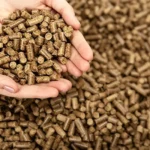


Shrimp feed production requires a stable supply of properly sized pellets with suitable density and water stability. For a small farm, producing feed internally can reduce dependence on outside suppliers, while a commercial manufacturer may need a much larger system to supply multiple aquaculture operations.
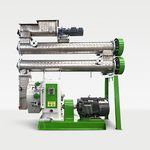
When selecting equipment, shrimp feed pellet machine capacity should be considered together with daily feed demand, raw material availability, operating hours, and the required pellet specifications. Choosing capacity based only on the maximum advertised output can result in either insufficient production or unnecessary investment.
How Should Capacity Be Calculated?
The first step is to estimate how much finished feed is needed every day.
A shrimp farm should consider the number of ponds, stocking density, feeding frequency, shrimp growth stage, and expected production cycle. Commercial feed producers should additionally evaluate customer demand and future expansion plans.
Once daily feed demand is known, the required hourly capacity can be estimated according to the planned working schedule.
For example, a factory that needs to produce approximately eight tons of feed per day and operates eight hours may consider a system around one ton per hour. However, actual production time includes cleaning, maintenance, die changes, and other interruptions, so some additional capacity may be useful.
Does Pellet Size Affect Capacity?
Yes. Shrimp feed is normally produced in several pellet sizes to accommodate different growth stages.
Smaller pellets may require different die specifications and processing conditions from larger pellets. The formula can also influence production performance.
Ingredients with different protein, fiber, starch, and moisture levels may behave differently during pelletizing. Therefore, a machine’s theoretical output should not be treated as a fixed value for every formula.
The final production capacity should ideally be evaluated using the actual raw materials and target pellet specifications.
What About Floating Aquatic Feed?
Shrimp feed is generally designed as sinking feed, while some fish farming applications require floating pellets. These products have different physical requirements and may use a different processing technology.
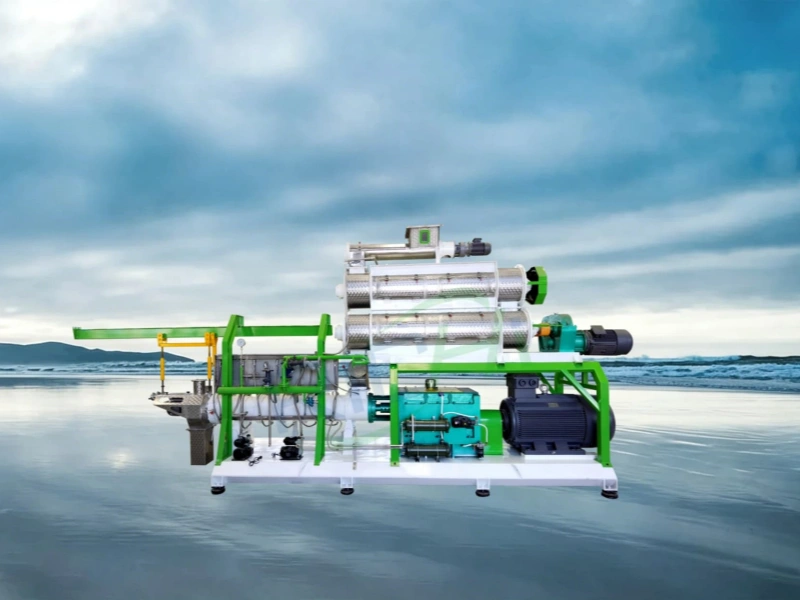
For example, a floating fish feed extruder machine price should be evaluated separately from conventional shrimp feed pelletizing equipment because extrusion is intended to provide controlled expansion and density.
The choice between pelletizing and extrusion should therefore be based on the final product rather than simply comparing machine capacity.
What Equipment Is Needed Around the Pellet Mill?
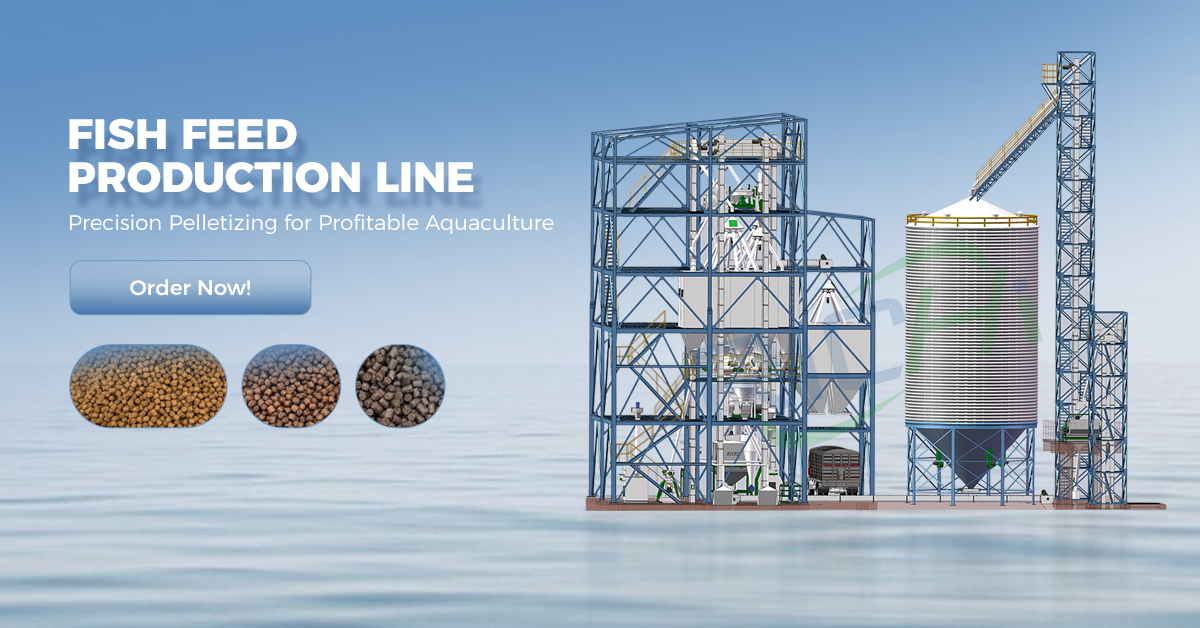
A complete shrimp feed production line normally includes several stages before and after pelletizing.
Raw materials may first pass through a hammer mill to achieve a suitable particle size. Ingredients are then accurately weighed and mixed before entering the conditioning or pelletizing section.
After pelletizing, the feed is cooled to reduce temperature and stabilize the finished product. Screening removes fines and separates pellets outside the required size range.
Packaging equipment can then weigh and pack the finished feed for storage or transportation.
The capacity of each section needs to be balanced. A high-output pellet mill will not achieve its potential if the mixer, cooler, screener, or conveyor has insufficient capacity.
How Does Raw Material Supply Influence Capacity?
Stable raw material availability is essential for continuous production.
A factory with limited access to fish meal, soybean meal, grain products, or other ingredients may not benefit from a large pelletizing system. The machine could remain idle because there is insufficient material to maintain production.
Storage capacity should therefore be included in the planning process. Ingredient storage needs to support the expected production schedule, while finished-feed storage should be sufficient for the output of the production line.
What Capacity Is Suitable for Different Businesses?
Small shrimp farms may prefer compact equipment that can produce feed for their own ponds. Medium-sized farms or local feed suppliers may require a larger continuous system.
Commercial manufacturers serving multiple customers need to consider not only current demand but also future expansion. Installing equipment with some spare capacity can reduce the need for an immediate upgrade when orders increase.
An experienced Richi Pellet Machine supplier can help evaluate raw material characteristics, pellet size, production targets, and auxiliary equipment before finalizing the system configuration.
Before selecting a production capacity, buyers can check this site out for additional information about aquatic feed processing and complete production line planning.
The right capacity is ultimately the one that matches the entire production flow. Proper coordination between raw material preparation, mixing, pelletizing, cooling, screening, and packaging is essential for maintaining stable shrimp feed production.
Related post:https://pelletizerequipment.com/sinking-fish-feed-machine/